

Hip mobility is one of the most overlooked aspects of overall movement health. Most people think of flexibility when they feel tight hips, but true hip mobility is much more than simply being able to touch your toes or sit cross-legged. It is the ability of your hip joints to move freely, with strength and control, through their full range of motion. When your hips are mobile, everything improves—walking feels smoother, posture becomes more upright, lower back pain may decrease, athletic performance often gets better, and even sitting for long hours becomes less taxing on the body.
Modern lifestyles, however, are not kind to the hips. Long hours of sitting, lack of movement variety, poor posture, and stress all contribute to stiff hip flexors, weak glutes, and limited internal and external rotation. Over time, these restrictions can affect the knees, pelvis, and spine, creating a chain reaction of discomfort. The good news is that yoga offers one of the most effective and sustainable ways to restore hidden hip mobility.

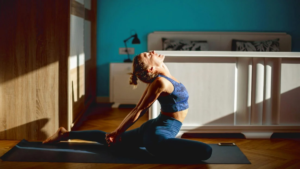
Yoga works because it combines stretching, strengthening, breath awareness, and mindful control. Instead of forcing the body into shapes, yoga encourages the hips to gradually open in multiple directions—flexion, extension, abduction, adduction, and rotation. The result is not just flexibility, but functional mobility that supports daily life and long-term joint health.
In this article, we’ll explore why hip mobility matters, what causes restriction, and the best yoga poses that can unlock deeper, healthier movement in the hips.
Why Hip Mobility Matters
The hip joint is a ball-and-socket joint, one of the most mobile joints in the human body. It is designed to move in many directions, but that mobility can be lost when surrounding muscles become tight or weak. When the hips stop moving well, the body compensates elsewhere—often in the lower back or knees.
Here’s why healthy hip mobility is essential:
- Reduces lower back tension: Tight hips often pull on the pelvis and increase strain on the lumbar spine.
- Improves posture: Balanced hips support a neutral pelvis and more upright spine.
- Enhances athletic performance: Running, squatting, lunging, and jumping all depend on hip function.
- Supports injury prevention: Restricted hips can cause overuse injuries in the knees, ankles, and back.
- Increases comfort in daily life: Climbing stairs, bending, sitting, and standing all become easier.
In yoga, hip mobility is especially important because many seated and standing postures rely on proper hip rotation and flexibility. Without it, the knees and lower back often take on too much load.
Understanding “Hidden” Hip Tightness
Sometimes hip stiffness is obvious—you feel tight when you squat or sit cross-legged. But often, restrictions are hidden. You may think your hamstrings or back are the problem, when the true limitation is the hips.
Common signs of hidden hip mobility restrictions include:
- Difficulty sitting on the floor comfortably
- Lower back discomfort after sitting
- Knees collapsing inward during squats
- Tightness in the front of the thighs or groin
- Uneven stride while walking or running
- One side feeling tighter than the other in yoga poses
This hidden tightness often comes from:
- Sedentary habits
- Weak glutes and deep hip stabilizers
- Tight hip flexors
- Restricted adductors (inner thighs)
- Limited internal rotation
- Stress and emotional holding patterns (many people store tension in the hips)
Yoga addresses all of these by using breath-led movement and long-held stretches that encourage the nervous system to relax and the muscles to release.
Best Yoga Poses to Unlock Hidden Hip Mobility
Below are some of the most effective yoga poses for improving hip mobility. Practice them slowly and consistently, focusing on alignment and breath rather than forcing depth.
1. Cat-Cow with Hip Awareness (Warm-Up)
Before targeting the hips directly, it helps to mobilize the pelvis and spine.
How to do it:
- Start on hands and knees.
- Inhale, arch the back, lift the chest and tailbone (Cow Pose).
- Exhale, round the spine, tuck the pelvis and chin (Cat Pose).
- Repeat for 8–10 breaths.
Why it helps:
This movement improves pelvic awareness, which is crucial for understanding how the hips and spine work together. Many people think they have tight hips when they actually lack pelvic control.
2. Low Lunge (Anjaneyasana)
One of the best poses for opening the hip flexors, especially if you sit a lot.
How to do it:
- Step one foot forward into a lunge with the back knee on the floor.
- Keep the front knee stacked over the ankle.
- Sink the hips gently forward while lifting the chest.
- Hold for 5–8 breaths, then switch sides.
Benefits:
- Stretches the hip flexors and quadriceps
- Improves hip extension
- Reduces tension from prolonged sitting
Tip:
Avoid collapsing into the lower back. Draw the lower belly in slightly and lengthen the tailbone down.
3. Lizard Pose (Utthan Pristhasana)
This deep hip opener targets the hip flexors, groin, and inner thighs.
How to do it:
- From a lunge, place both hands inside the front foot.
- Lower the back knee if needed.
- Option to stay on hands or lower onto forearms.
- Hold for 5–10 breaths.
Benefits:
- Opens the groin
- Lengthens the psoas
- Improves mobility in the front and inner hip
Tip:
If the pose feels intense, place your hands on blocks for support.
4. Pigeon Pose (Eka Pada Rajakapotasana Prep)
A classic pose for external hip rotation and glute release.
How to do it:
- From Downward Dog, bring one knee toward the same-side wrist.
- Angle the shin comfortably across the mat.
- Extend the back leg straight behind you.
- Keep the hips as level as possible.
- Stay upright or fold forward for 8–12 breaths.
Benefits:
- Targets the glutes, piriformis, and outer hip
- Improves external rotation
- Helps relieve tension that contributes to sciatic discomfort
Tip:
If the front hip lifts off the floor, place a folded blanket or block under it for support.
5. Bound Angle Pose (Baddha Konasana)
This seated posture is excellent for opening the inner thighs and groin.
How to do it:
- Sit tall and bring the soles of the feet together.
- Let the knees drop out to the sides.
- Hold the feet or ankles.
- Lengthen the spine rather than forcing the knees down.
- Stay for 8–10 breaths.
Benefits:
- Opens the adductors
- Improves groin mobility
- Encourages better seated posture
Tip:
Sit on a folded blanket if the lower back rounds.
6. Garland Pose (Malasana)
A powerful squat-based pose that builds functional hip mobility.
How to do it:
- Stand with feet slightly wider than hip-width.
- Turn the toes out slightly if needed.
- Bend the knees and lower into a deep squat.
- Bring palms together at the chest.
- Keep the chest lifted and spine long.
- Hold for 5–8 breaths.
Benefits:
- Improves hip flexion
- Opens the ankles, groin, and pelvis
- Builds real-world mobility for sitting, squatting, and lifting
Tip:
Place a rolled blanket under the heels if they lift.
7. Frog Pose (Mandukasana Variation)
This pose is intense but extremely effective for the inner thighs and deep hip opening.
How to do it:
- Start on hands and knees.
- Widen the knees apart while keeping the ankles in line with the knees.
- Lower to forearms if comfortable.
- Keep the hips in line with the knees.
- Hold for 5–10 slow breaths.
Benefits:
- Deep stretch for the adductors
- Improves side-to-side hip mobility
- Releases tension in the groin and pelvic floor
Tip:
Move slowly into and out of this pose. It can be very strong, so use padding under the knees.
8. Happy Baby Pose (Ananda Balasana)
A gentle and accessible hip opener for the end of practice.
How to do it:
- Lie on your back.
- Bend the knees toward the chest.
- Hold the outsides of the feet or ankles.
- Draw the knees toward the armpits.
- Keep the lower back grounded.
- Hold for 8–12 breaths.
Benefits:
- Opens the hips and inner thighs
- Decompresses the lower back
- Encourages relaxation in the pelvis
Tip:
Rock gently side to side for a soothing massage of the lower back.
9. Reclined Figure Four Stretch
This is a safer alternative to Pigeon for people with sensitive knees.
How to do it:
- Lie on your back with knees bent.
- Cross one ankle over the opposite thigh.
- Thread your hands behind the bottom thigh.
- Draw the legs toward you.
- Hold for 6–10 breaths per side.
Benefits:
- Stretches the outer hip and glutes
- Improves external rotation
- Reduces tension without compressing the knees
10. Half Split (Ardha Hanumanasana)
Although often considered a hamstring stretch, it also improves the relationship between hamstrings, pelvis, and hip mobility.
How to do it:
- From low lunge, shift the hips back over the rear knee.
- Straighten the front leg with the heel grounded.
- Flex the front foot.
- Fold gently over the leg while keeping the spine long.
- Hold for 5–8 breaths.
Benefits:
- Lengthens the hamstrings
- Improves pelvic control
- Supports smoother hip hinging mechanics
How to Practice for Best Results
Doing hip-opening poses once in a while can feel good, but real mobility gains come from consistency and smart sequencing.
Follow these guidelines:
- Warm up first: Never force deep stretches into cold muscles.
- Breathe slowly: Exhaling helps the nervous system release guarding tension.
- Hold with awareness: Stay long enough (5–10 breaths) for the body to adapt.
- Balance strength and stretch: Mobility requires control, not just passive flexibility.
- Practice 3–5 times per week: Even 10–20 minutes can create noticeable change.
- Respect pain signals: Stretching discomfort is okay; sharp or pinching pain is not.
Common Mistakes to Avoid
Many people accidentally make hip mobility work less effective—or even irritating—by making these mistakes:
- Forcing depth too quickly
Going deeper doesn’t always mean better. The body responds best to gradual, consistent exposure. - Ignoring pelvic alignment
If the pelvis twists or dumps forward, the stretch may shift into the lower back or knees. - Holding the breath
Breath-holding increases muscular tension and reduces the benefit of the pose. - Overstretching without strengthening
Hypermobile people especially need stability work alongside flexibility. - Comparing sides
One hip is often tighter. Work with what each side needs rather than trying to make them identical instantly.
A Simple 15-Minute Hip Mobility Yoga Flow
If you want a quick routine, try this:
- Cat-Cow – 1 minute
- Low Lunge – 1 minute each side
- Lizard Pose – 1 minute each side
- Half Split – 45 seconds each side
- Pigeon Pose or Reclined Figure Four – 1 minute each side
- Bound Angle Pose – 2 minutes
- Malasana – 1 minute
- Happy Baby – 2 minutes
This short sequence can be done in the morning, after workouts, or at the end of a long workday.
Conclusion
Unlocking hidden hip mobility is not about chasing extreme flexibility or mastering advanced yoga poses. It’s about restoring natural, pain-free movement to one of the body’s most important joints. When the hips move well, the entire body benefits—from the lower back and knees to posture, balance, and athletic performance.
Yoga is uniquely powerful for hip mobility because it blends mindful stretching with breath, alignment, and body awareness. Poses like Low Lunge, Lizard, Pigeon, Malasana, and Happy Baby work in different planes of motion to release tight muscles, strengthen support structures, and re-educate the nervous system to allow greater freedom.
The key is patience and consistency. Hidden hip tightness doesn’t disappear overnight, especially if it has built up over years of sitting or repetitive movement patterns. But with regular practice, even a few minutes several times a week can create profound changes. Your hips can become stronger, more open, and more responsive—helping you move with ease not just on the mat, but in everyday life.
If you want healthier posture, less lower back tension, smoother workouts, and better long-term joint function, start with your hips. The right yoga poses can truly unlock mobility you didn’t realize you had.
FAQs
1. How often should I practice yoga for hip mobility?
For best results, practice 3 to 5 times per week. Even a 10–15 minute routine can improve mobility over time if done consistently.
2. How long does it take to see improvement in hip mobility?
Some people feel relief after just one session, but noticeable changes usually take 2 to 6 weeks of regular practice, depending on how tight or restricted the hips are.
3. Is hip mobility the same as hip flexibility?
No. Flexibility is how far a muscle can lengthen, while mobility is your ability to move a joint through its range of motion with strength and control. Yoga can improve both when practiced properly.
4. Can yoga help with lower back pain caused by tight hips?
Yes, in many cases. Tight hips can pull on the pelvis and strain the lower back. Improving hip mobility may reduce this tension. However, if pain is severe or persistent, consult a healthcare professional.
5. Which yoga pose is best for tight hips?
There isn’t just one “best” pose, but Low Lunge, Pigeon Pose, Lizard Pose, and Malasana are among the most effective for many people.
6. What if Pigeon Pose hurts my knees?
Use Reclined Figure Four Stretch instead. It provides a similar outer-hip stretch with less pressure on the knee joint.
7. Should hip-opening yoga feel painful?
No. You may feel strong stretching sensations, but you should not feel sharp, pinching, or joint pain. If you do, ease out of the pose and modify it.
8. Can beginners do these hip mobility poses?
Absolutely. Most of these poses can be modified with props like blocks, blankets, or bolsters, making them accessible for beginners.
9. Why do hips feel emotional during yoga?
Many people report emotional release during hip openers. While research is still evolving, the hips are often an area where the body holds chronic tension and stress. Deep breathing and mindful movement can sometimes bring that tension to the surface.
10. Is it better to do hip mobility yoga before or after a workout?
Both can work:
- Before a workout: Use dynamic, gentle versions to prepare movement.
- After a workout: Use longer holds for deeper release and recovery.