


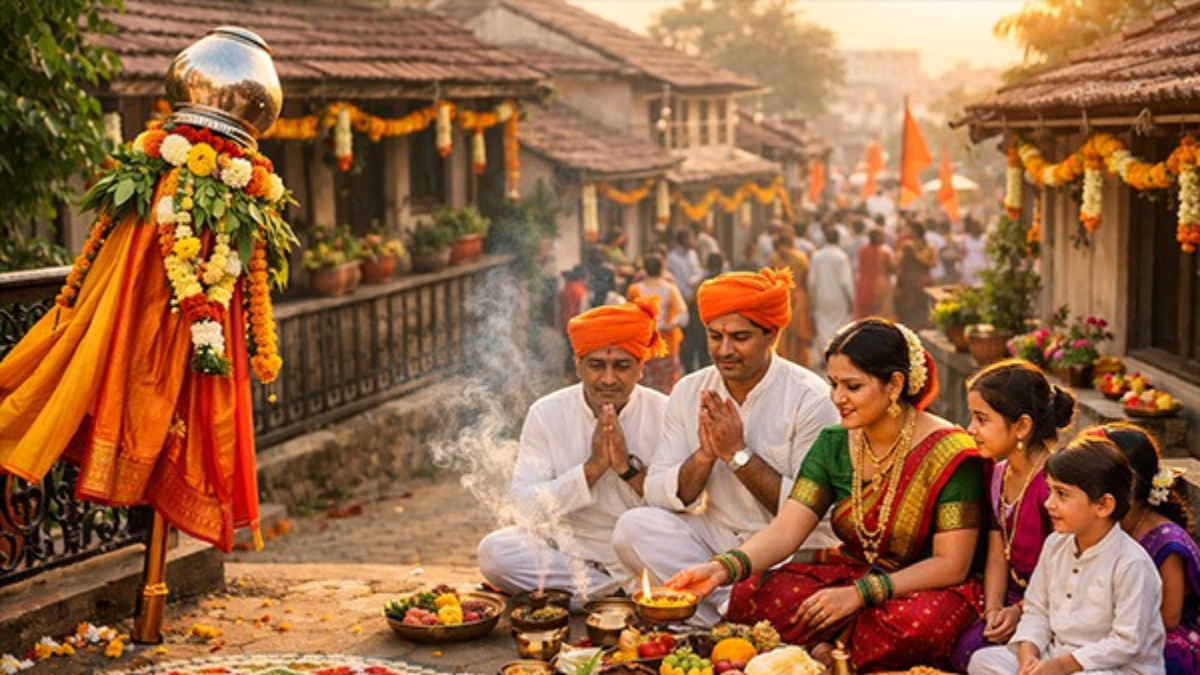
Gudi Padwa is one of the most important festivals celebrated in Maharashtra and other parts of India, marking the beginning of the Hindu New Year according to the lunar calendar (Chaitra Shukla Pratipada). The festival usually falls in March or April and is observed with great enthusiasm, devotion, and cultural rituals.
What is Gudi Padwa?
The term “Gudi Padwa” comes from two words:
- Gudi – A flag or a symbolic pole decorated with flowers, mango leaves, a bright cloth, and a silver or copper pot placed on top.
- Padwa – Refers to the first day of the Chaitra month in the Hindu lunar calendar.

The Gudi is hoisted outside homes to symbolize victory, prosperity, and new beginnings.
Spiritual Significance of Gudi Padwa
Gudi Padwa holds deep spiritual and mythological importance in Hindu tradition:
1. Celebration of the New Year
- Marks the start of Chaitra Shukla Pratipada, the first day of the Hindu lunar calendar.
- A time for renewal, reflection, and new beginnings.
2. Victory of Good over Evil
- The Gudi symbolizes the victory of Lord Rama over Ravana according to some interpretations.
- It also represents King Shalivahana’s victory over enemies, marking the beginning of a prosperous reign.
3. Honoring Lord Brahma
- Some legends associate Gudi Padwa with the creation of the universe by Lord Brahma.
- The day is considered auspicious for starting new ventures and spiritual activities.
4. Symbol of Prosperity and Happiness
- The Gudi hoisted outside homes is a symbol of wealth, good luck, and warding off evil.
- It is believed to invite positive energy into the household.
5. Harvest Festival
- Gudi Padwa also marks the harvest season, celebrating abundance and gratitude for a good yield.
How is Gudi Padwa Celebrated?
1. Raising the Gudi
- A bright green or yellow cloth is tied to a bamboo stick, adorned with mango leaves, neem leaves, flowers, and a silver or copper kalash (pot) on top.
- The Gudi is hoisted outside windows or doors, facing the sunrise, symbolizing prosperity and victory.
2. Special Rituals
- Devotees perform puja (worship), lighting lamps and offering prayers to Lord Vishnu, Shiva, or Brahma depending on family tradition.
- Neem leaves and jaggery are consumed as part of the ritual, symbolizing health, happiness, and protection.
3. Traditional Foods
- People prepare special dishes like Puran Poli, Shrikhand, and Sweets.
- Neem leaves with jaggery are eaten to purify the body and mind.
4. New Year Preparations
- Homes are cleaned, decorated, and adorned with rangoli.
- People wear new clothes and exchange greetings with friends and relatives.
5. Community Celebrations
- In Maharashtra, cultural events, folk dances (like Lavani), and processions are organized.
- People also visit temples to seek blessings for health, prosperity, and happiness.
Mythological Stories Behind Gudi Padwa
- Victory of King Shalivahana – The festival marks the day when King Shalivahana returned from defeating his enemies.
- Lord Rama’s Victory – The Gudi symbolizes Rama’s triumph over evil, bringing light and prosperity.
- Creation by Lord Brahma – Celebrates the first day of creation according to Hindu scriptures.
Modern Significance
- Gudi Padwa is not just a religious festival but also a cultural and social celebration.
- It emphasizes family bonding, gratitude, and spiritual reflection.
- Many people start new ventures, buy new property, or begin studies on this day as it is considered highly auspicious.
FAQs – Gudi Padwa
1. What is the date of Gudi Padwa?
- It is celebrated on Chaitra Shukla Pratipada, usually falling in March or April according to the lunar calendar.
2. Why is the Gudi hoisted outside homes?
- The Gudi symbolizes victory, prosperity, and protection from evil forces.
3. Which Hindu deity is worshipped on Gudi Padwa?
- Mainly Lord Vishnu, Lord Shiva, and Lord Brahma, depending on family tradition.
4. What traditional foods are eaten on Gudi Padwa?
- Puran Poli, Shrikhand, neem leaves with jaggery, and other festive dishes.
5. Is Gudi Padwa celebrated outside Maharashtra?
- Yes, it is celebrated in Karnataka, Goa, and other parts of India, sometimes under different names like Ugadi in Andhra Pradesh and Karnataka.
6. What is the spiritual importance of Gudi Padwa?
- It signifies new beginnings, triumph of good over evil, prosperity, and spiritual growth.
Conclusion
Gudi Padwa is more than a New Year celebration. It is a symbol of hope, victory, and spiritual renewal. By hoisting the Gudi, performing rituals, and sharing festive meals, devotees embrace positivity, prosperity, and divine blessings for the year ahead.

Gudi Padwa reminds us of the timeless values of Hindu tradition, including gratitude, devotion, and the celebration of life’s victories.
🙏 Shubh Gudi Padwa – May the New Year bring prosperity and happiness! 🙏