
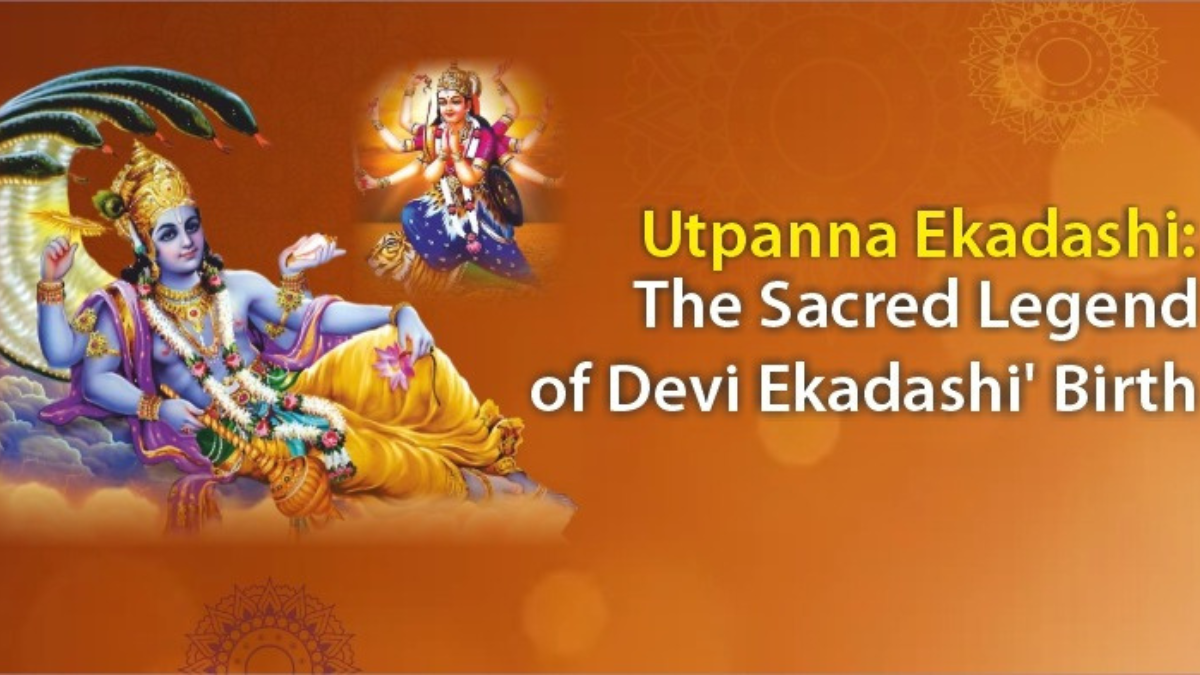
In Hindu tradition, Ekadashi is one of the most sacred fasting days dedicated to Lord Vishnu. Observed on the 11th day of every lunar fortnight, Ekadashi holds immense spiritual importance for devotees seeking purification, liberation, and divine blessings.
Among the 24 Ekadashis observed in a year, Utpanna Ekadashi is particularly special. It marks the appearance or birth (Utpatti) of Ekadashi Devi, the divine power created by Lord Vishnu to destroy evil and protect righteousness.

Devotees believe that observing a fast on Utpanna Ekadashi removes sins, strengthens devotion, and leads the soul closer to salvation.
This sacred day reminds devotees that devotion (bhakti), discipline, and faith can defeat even the most powerful negative forces.
When is Utpanna Ekadashi Celebrated?
Utpanna Ekadashi falls during the Krishna Paksha (waning phase of the moon) in the Hindu month of Margashirsha (November–December).
This Ekadashi marks the origin of all Ekadashi fasts. It is considered the first Ekadashi and the beginning of the sacred fasting tradition.
Devotees across India and worldwide observe the day by fasting, chanting Vishnu mantras, and performing devotional rituals.
The Sacred Story of Utpanna Ekadashi
The story of Utpanna Ekadashi is described in ancient Hindu scriptures such as the Padma Purana.
It explains how Ekadashi Devi was born to destroy the demon Mura and protect the universe.
The Rise of the Demon Mura
Long ago, there lived a powerful and cruel demon named Mura. He had immense strength and terrorized the three worlds — Heaven (Swarga), Earth (Prithvi), and the Netherworld (Patala).
The demon defeated the gods and captured the heavenly kingdom.
The defeated Devas (gods) went to Lord Vishnu and prayed:
“O Lord Vishnu, protector of the universe, please save us from the cruelty of Mura.”
Hearing their prayers, Lord Vishnu decided to confront the demon.
The Battle Between Vishnu and Mura
Lord Vishnu engaged in a fierce battle with Mura and his army.
The war continued for thousands of years, shaking the entire universe.
Although Lord Vishnu destroyed many demons, Mura remained undefeated.
Eventually, Lord Vishnu entered a cave named Himalaya’s Badarikashrama to rest for a short time.
Mura’s Evil Plan
When Mura saw that Lord Vishnu was resting, he thought it was the perfect opportunity to attack and kill him.
The demon entered the cave quietly, preparing to strike.
However, something miraculous happened.
The Birth of Ekadashi Devi
Suddenly, a radiant divine goddess emerged from Lord Vishnu’s body.
She was extremely powerful and glowing with divine energy.
This divine goddess challenged the demon Mura and fought him fiercely.
After a short but intense battle, she destroyed the demon instantly.
Lord Vishnu’s Blessing
When Lord Vishnu woke up, he saw the demon dead and the radiant goddess standing nearby.
He asked her who she was.
The goddess humbly replied:
“O Lord, I was born from your divine energy to protect you and destroy the demon.”
Lord Vishnu was pleased and gave her a blessing.
He declared:
- She would be known as Ekadashi Devi.
- The day she appeared would be called Ekadashi.
- Whoever observes fasting on Ekadashi with devotion will receive freedom from sins and spiritual upliftment.
Because this was the first appearance of Ekadashi Devi, the day became known as Utpanna Ekadashi, meaning the birth of Ekadashi.
Spiritual Significance of Utpanna Ekadashi
Utpanna Ekadashi carries deep spiritual symbolism.
1. Victory of Good Over Evil
Just like the goddess defeated Mura, the festival reminds us that divine power always triumphs over negativity and evil forces.
2. Beginning of Ekadashi Fasting
This day marks the origin of Ekadashi fasting, one of the most important spiritual disciplines in Hinduism.
3. Purification of Mind and Body
Fasting on Ekadashi helps purify both the physical body and spiritual consciousness.
4. Strengthening Devotion
Devotees dedicate the entire day to prayer, meditation, and remembrance of Lord Vishnu.
5. Path Toward Liberation
Scriptures say that observing Ekadashi regularly helps the soul progress toward moksha (liberation).
Rituals and Traditions of Utpanna Ekadashi
Devotees follow several sacred rituals on this day.
1. Early Morning Bath
Devotees wake up before sunrise and take a holy bath, often adding Ganga water if available.
2. Worship of Lord Vishnu
The idol or image of Lord Vishnu is decorated with:
- Flowers
- Tulsi leaves
- Sandalwood paste
- Incense sticks
Devotees chant Vishnu mantras and offer prayers.
3. Ekadashi Fast
Many devotees observe a strict fast, which may include:
- Nirjala fast (without water)
- Fruit-only diet
- Milk and simple foods
Grains and rice are strictly avoided.
4. Reading Sacred Scriptures
Devotees read or listen to the Ekadashi Vrat Katha and stories of Lord Vishnu.
5. Night Vigil (Jagran)
Some devotees stay awake at night singing bhajans and devotional songs.
Foods Allowed During Ekadashi Fast
During the Ekadashi fast, devotees usually consume:
- Fruits
- Milk
- Yogurt
- Dry fruits
- Sabudana (tapioca pearls)
- Singhara flour
- Potatoes
Foods avoided include:
- Rice
- Wheat
- Lentils
- Beans
- Onion and garlic
Benefits of Observing Utpanna Ekadashi
Hindu scriptures describe many benefits of observing this sacred fast.
1. Removal of Past Sins
Fasting and prayer on Ekadashi help cleanse accumulated karmic sins.
2. Mental Peace
Devotion and fasting calm the mind and reduce stress.
3. Spiritual Growth
Regular Ekadashi fasting strengthens spiritual discipline.
4. Blessings of Lord Vishnu
Devotees receive protection, prosperity, and guidance.
5. Health Benefits
Fasting gives the digestive system a break and helps detoxify the body.
Symbolic Meaning of the Ekadashi Story
The story of Utpanna Ekadashi also represents deeper spiritual truths.
- Lord Vishnu symbolizes the divine consciousness.
- Demon Mura represents ignorance, ego, and negative thoughts.
- Ekadashi Devi symbolizes spiritual discipline and devotion.
When a person practices devotion and self-control, negative forces within the mind are destroyed.
How Utpanna Ekadashi is Celebrated in India
Different regions celebrate the day with devotion.
Temples
Temples dedicated to Lord Vishnu and Krishna hold special prayers and rituals.
Devotional Gatherings
Devotees gather for:
- Bhajans
- Kirtans
- Religious discourses
Charity and Donations
People donate food, clothes, and money to the needy.
Charity is considered very auspicious on this day.
Importance of Tulsi in Ekadashi
Tulsi (holy basil) is considered extremely sacred in Vishnu worship.
Devotees offer Tulsi leaves to Lord Vishnu while chanting prayers.
Scriptures say that even a small offering of Tulsi on Ekadashi pleases Lord Vishnu greatly.
Breaking the Fast (Parana)
The fast is usually broken the next day, known as Dwadashi.
Devotees break the fast after sunrise with:
- Fruits
- Light vegetarian food
Before eating, food is first offered to Lord Vishnu.
Conclusion
Utpanna Ekadashi is not just a religious fast — it is a reminder of the power of devotion, discipline, and divine protection.
The sacred story of Ekadashi Devi teaches that when we surrender ourselves to divine guidance, even the strongest negative forces cannot harm us.
By observing Utpanna Ekadashi with sincerity, devotees strengthen their connection with Lord Vishnu and move toward a life filled with peace, spiritual awareness, and divine blessings.
Frequently Asked Questions (FAQs)
1. What is Utpanna Ekadashi?
Utpanna Ekadashi is a sacred fasting day in Hinduism that celebrates the birth of Ekadashi Devi, the divine power created by Lord Vishnu to destroy evil.
2. When is Utpanna Ekadashi celebrated?
It is observed during the Krishna Paksha of the Margashirsha month in the Hindu lunar calendar, usually falling in November or December.
3. Why is Ekadashi fasting important?
Ekadashi fasting helps purify the mind and body, remove sins, and strengthen devotion to Lord Vishnu.
4. Can we eat food on Ekadashi?
Yes, but only specific foods like fruits, milk, and sabudana are allowed. Grains, rice, and lentils are avoided.
5. Who is Ekadashi Devi?
Ekadashi Devi is a divine goddess born from Lord Vishnu’s energy to destroy the demon Mura and protect righteousness.
6. What is the main message of Utpanna Ekadashi?
The main message is that faith and devotion always defeat evil and negativity.
7. Is Ekadashi fasting compulsory?
No, it is not compulsory, but observing it with devotion is believed to bring spiritual and karmic benefits.