


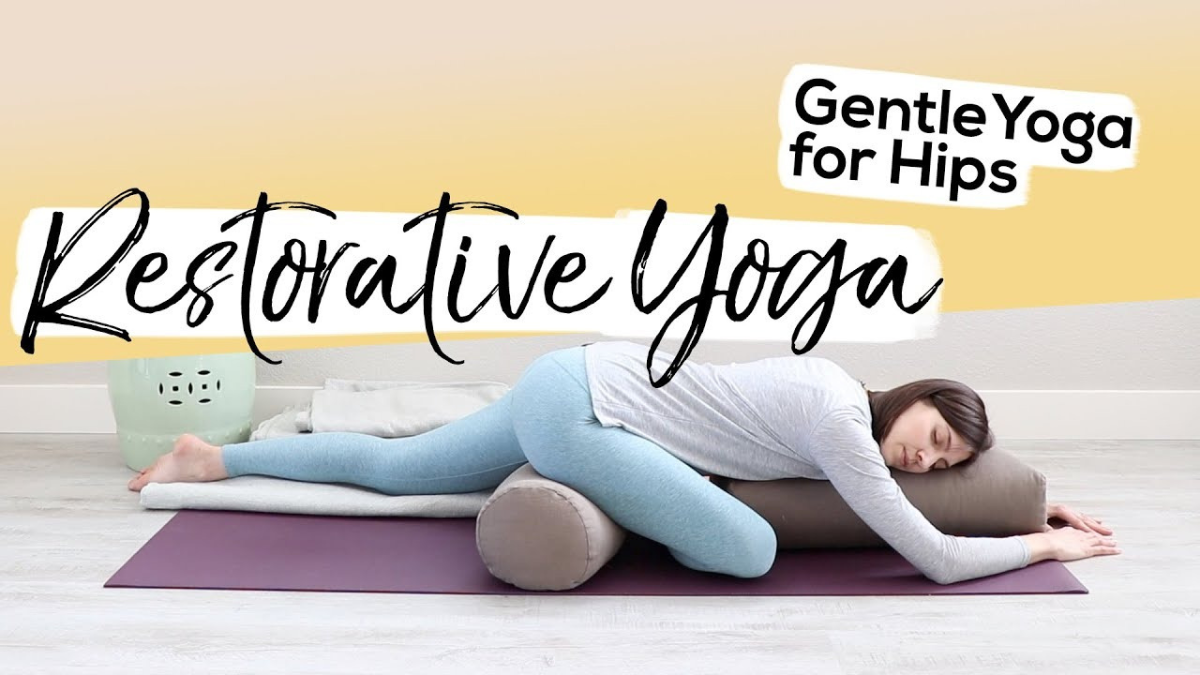
Yoga is one of the most beginner-friendly ways to improve flexibility, body awareness, and emotional balance. If you are looking for gentle hip and breast yoga poses for beginners, you may be aiming to release tight hips, improve posture, open the chest area, and support overall comfort and confidence. These areas often hold tension—especially if you spend long hours sitting, working at a desk, or carrying stress in the upper body.
Before we begin, a quick note: when people say “breast yoga,” they usually mean gentle chest-opening poses that support the muscles around the breasts, including the chest, shoulders, upper back, and rib cage. Yoga does not directly change breast size or shape, but it can improve posture, circulation, muscular tone, and body awareness, which may help the chest appear more lifted and open.

This article will guide you through beginner-safe yoga poses for the hips and chest (breast area), explain their benefits, and provide a simple practice sequence you can follow at home.
Why Focus on Hips and the Chest?
The hips and chest are two of the most tension-prone areas in the body.
Benefits of Gentle Hip Yoga
Gentle hip-opening yoga can help:
- Reduce stiffness from sitting too long
- Improve mobility in the hip joints
- Ease lower back discomfort
- Release emotional tension often stored in the pelvic region
- Support better walking, standing, and posture
Benefits of Gentle Chest-Opening Yoga
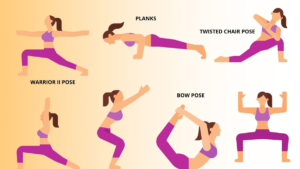
Gentle chest or “breast” yoga can help:
- Improve posture by reducing rounded shoulders
- Open tight chest muscles from phone or laptop use
- Encourage deeper breathing
- Strengthen upper back muscles
- Create a more lifted, open appearance in the chest area
- Reduce neck and shoulder tension
For beginners, the key is to practice slowly, gently, and without forcing the body.
7 Gentle Hip Yoga Poses for Beginners
These poses are easy to learn and can be modified with pillows, yoga blocks, or folded blankets.
1. Butterfly Pose (Baddha Konasana)
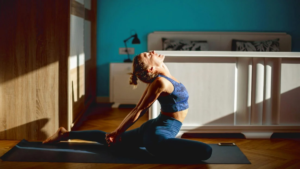
This is one of the best beginner hip openers.
How to do it:
- Sit on the floor with your spine tall.
- Bring the soles of your feet together.
- Let your knees gently fall outward.
- Hold your feet or ankles.
- Sit upright, or fold forward slightly if comfortable.
Benefits:
- Opens inner thighs and groin
- Improves hip flexibility
- Encourages upright posture
Beginner tip:
Place cushions under your knees if your hips feel tight.
2. Child’s Pose (Balasana)
Child’s Pose is calming and gently opens the hips and lower back.
How to do it:
- Kneel on the floor.
- Bring your big toes together and knees apart or together.
- Sit your hips back toward your heels.
- Stretch your arms forward and rest your forehead down.
- Breathe deeply.
Benefits:
- Gently stretches hips and thighs
- Relieves lower back tension
- Calms the nervous system
Beginner tip:
Put a pillow under your chest or forehead for extra comfort.
3. Happy Baby Pose (Ananda Balasana)
This pose provides a soft, playful stretch for the hips.
How to do it:
- Lie on your back.
- Bend your knees toward your chest.
- Hold the outsides of your feet, ankles, or shins.
- Keep your knees wide and gently draw them toward the floor.
- Rock side to side if that feels good.
Benefits:
- Opens hips and inner thighs
- Releases lower back tension
- Improves pelvic mobility
Beginner tip:
If reaching your feet is hard, hold your calves or use a yoga strap.
4. Reclined Figure Four Stretch
A gentle alternative to deeper hip openers.
How to do it:
- Lie on your back with knees bent.
- Cross your right ankle over your left thigh.
- Keep the right foot flexed.
- Stay there, or thread your hands behind the left thigh.
- Repeat on the other side.
Benefits:
- Targets outer hips and glutes
- Eases piriformis tightness
- Can help reduce sitting-related hip stiffness
Beginner tip:
Keep one foot on the floor if the full version feels intense.
5. Low Lunge (Anjaneyasana – Gentle Version)
This pose stretches the front of the hips, especially the hip flexors.
How to do it:
- Start on hands and knees.
- Step your right foot forward between your hands.
- Keep the left knee on the floor.
- Place your hands on your front thigh or on blocks.
- Gently shift forward until you feel a stretch in the front of the left hip.
- Switch sides.
Benefits:
- Stretches tight hip flexors
- Improves mobility from prolonged sitting
- Supports better posture
Beginner tip:
Use a folded blanket under the back knee.
6. Seated Wide-Leg Forward Fold (Gentle Version)
This pose gives a mild stretch to the inner thighs and hips.
How to do it:
- Sit with your legs comfortably wide.
- Keep your spine tall.
- Place your hands on the floor in front of you.
- Lean forward only a little, maintaining a long spine.
Benefits:
- Opens inner thighs and hips
- Encourages hamstring flexibility
- Improves pelvic awareness
Beginner tip:
Sit on a folded blanket to help tilt your pelvis forward.
7. Supine Bound Angle Pose (Supta Baddha Konasana)
A deeply relaxing restorative pose.
How to do it:
- Lie on your back.
- Bring the soles of your feet together.
- Let your knees fall open.
- Place pillows or blocks under your thighs if needed.
- Rest your arms by your sides.
Benefits:
- Gently opens hips and groin
- Encourages relaxation
- Supports deep breathing
Beginner tip:
This is perfect at the end of your practice for 3–5 minutes.
5 Gentle Chest (“Breast”) Yoga Poses for Beginners
These poses focus on the chest, shoulders, upper back, and rib cage.
1. Cat-Cow Pose (Marjaryasana-Bitilasana)
A great warm-up for the spine and chest.
How to do it:
- Come to hands and knees.
- Inhale: lift your chest and tailbone (Cow Pose).
- Exhale: round your spine and tuck your chin (Cat Pose).
- Repeat slowly for 5–8 breaths.
Benefits:
- Mobilizes the spine
- Opens the chest gently
- Improves posture and breathing
Beginner tip:
Move slowly with your breath instead of rushing.
2. Cobra Pose (Bhujangasana – Baby Cobra)
This is a gentle chest opener and upper-back strengthener.
How to do it:
- Lie on your belly.
- Place your hands under your shoulders.
- Keep elbows bent and close to your body.
- Inhale and lift your chest slightly using back strength more than your hands.
- Keep shoulders away from your ears.
Benefits:
- Opens the chest
- Strengthens upper back
- Counteracts slouching
Beginner tip:
Lift only a little. A small Cobra is often best for beginners.
3. Sphinx Pose
A softer alternative to Cobra Pose.
How to do it:
- Lie on your belly.
- Place your forearms on the floor with elbows under shoulders.
- Press gently into the forearms.
- Lift your chest and broaden across the collarbones.
Benefits:
- Opens the front body
- Strengthens upper back gently
- Encourages better posture
Beginner tip:
If your lower back feels compressed, move your elbows slightly forward.
4. Supported Fish Pose (Matsyasana – Restorative Version)
This is one of the best gentle chest openers for beginners.
How to do it:
- Place a yoga block, bolster, or firm pillow lengthwise under your upper back.
- Lie back slowly so your chest opens.
- Let your arms relax out to the sides.
- Keep knees bent or legs extended.
- Breathe deeply into your rib cage.
Benefits:
- Opens the chest and shoulders
- Encourages deep breathing
- Relieves upper-body tension
- Can create a lifted, open chest posture
Beginner tip:
Support your head if your neck feels strained.
5. Puppy Pose (Uttana Shishosana)
A gentle heart-opening pose.
How to do it:
- Start on hands and knees.
- Walk your hands forward.
- Keep your hips over your knees.
- Lower your chest and forehead (or chin) toward the floor.
Benefits:
- Opens chest, shoulders, and upper back
- Improves thoracic mobility
- Releases tension from desk posture
Beginner tip:
Place a cushion under your chest or forehead for support.
A Simple 15-Minute Beginner Routine
Here is a gentle sequence you can practice 3–5 times a week.
Warm-Up (3 minutes)
- Cat-Cow Pose – 1 minute
- Child’s Pose – 1 minute
- Butterfly Pose – 1 minute
Hip Focus (6 minutes)
- Reclined Figure Four – 1 minute each side
- Low Lunge – 1 minute each side
- Happy Baby – 2 minutes
Chest/Breast Focus (4 minutes)
- Sphinx Pose – 1 minute
- Baby Cobra – 3–5 slow breaths, repeat 2 times
- Puppy Pose – 1–2 minutes
Cool Down (2 minutes)
- Supported Fish Pose – 1 minute
- Supine Bound Angle Pose – 1 minute or longer
This routine is gentle enough for most beginners and can be adjusted based on your comfort.
Tips for Safe Beginner Practice
To make the most of these poses:
- Never force a stretch. Mild sensation is okay; pain is not.
- Use props freely. Pillows, cushions, folded blankets, and blocks are your friends.
- Breathe slowly. Deep, steady breathing helps muscles relax.
- Hold gently. Stay 20–60 seconds in each pose unless otherwise noted.
- Practice consistently. A short daily routine is better than a long routine once a week.
- Listen to your body. Every body is different, and flexibility improves gradually.
If you have recent surgery, severe back pain, hip injury, shoulder injury, or breast-related medical concerns, it’s best to consult a qualified healthcare professional before starting.
Can Yoga Help the Breast Area?
Many beginners ask whether yoga can “tone” or “lift” the breast area.
The truth is:
- Breasts themselves are made mostly of fatty and glandular tissue, not muscle.
- Yoga cannot directly enlarge or reshape breast tissue.
- However, yoga can strengthen the pectoral support area, shoulders, and upper back, which may improve posture and make the chest appear more open and naturally lifted.
- Chest-opening poses can also improve breathing, confidence, and reduce tightness around the upper body.
So while yoga is not a cosmetic treatment, it can absolutely support a healthier, more comfortable, and more aligned chest area.
Conclusion
Gentle hip and chest-opening yoga poses are an excellent starting point for beginners who want to feel more flexible, relaxed, and connected to their bodies. Tight hips can affect posture, lower back comfort, and daily movement, while a closed chest can contribute to shallow breathing, shoulder tension, and slouching. By practicing simple poses like Butterfly, Child’s Pose, Reclined Figure Four, Sphinx, Baby Cobra, and Supported Fish, you can safely begin opening these important areas without strain.
The most important part of beginner yoga is consistency, comfort, and patience. You do not need to be flexible to start. With regular practice, even just 10–15 minutes a few times a week, you may notice improved mobility, better posture, easier breathing, and a greater sense of calm. Keep your practice gentle, use props when needed, and allow your body to open gradually over time.
FAQs
1. Can yoga reduce hip tightness for beginners?
Yes. Gentle poses like Butterfly Pose, Child’s Pose, Low Lunge, and Reclined Figure Four can gradually improve hip mobility and reduce stiffness caused by sitting or inactivity.
2. Does yoga increase breast size?
No. Yoga does not directly increase breast size because breasts are not muscles. However, chest-opening poses can improve posture and strengthen surrounding muscles, making the chest look more lifted and open.
3. How often should beginners practice these poses?
Beginners can start with 3–5 times per week, even for just 10–15 minutes per session. Consistency matters more than long workouts.
4. Are these poses safe during periods?
In most cases, yes. Gentle restorative poses like Child’s Pose, Butterfly Pose, Supine Bound Angle Pose, and Supported Fish can feel especially soothing. Avoid anything that causes discomfort.
5. Can I do these poses at home without a yoga mat?
Absolutely. A soft carpet, folded blanket, or firm rug can work. You can also use pillows and cushions instead of yoga props.
6. How long does it take to see results?
Some people feel relief and relaxation after the first session. Improvements in flexibility, posture, and mobility usually become more noticeable after 2–6 weeks of regular practice.
7. Which pose is best for opening the chest gently?
Supported Fish Pose is one of the best beginner-friendly chest openers because it is restorative, relaxing, and easy to modify with pillows or a bolster.
8. What if I am not flexible at all?
That is completely okay. Yoga is for all body types and flexibility levels. Use props, move slowly, and focus on gentle progress instead of deep stretches.