


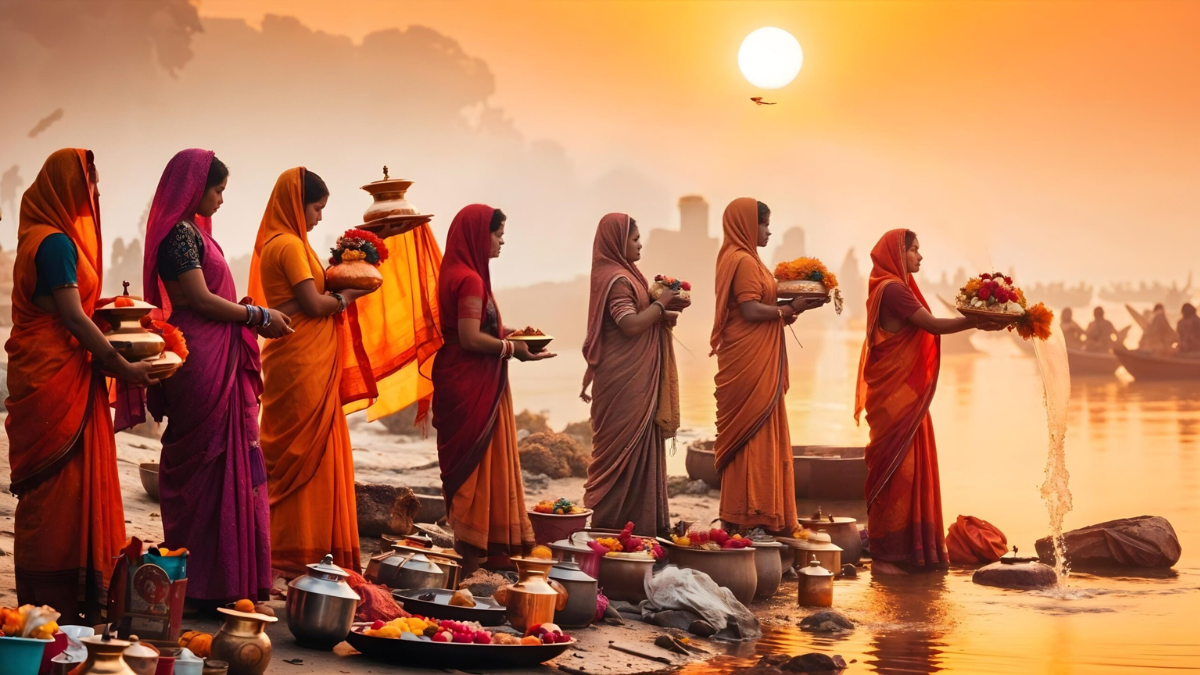
Chhath Puja is one of the most sacred and ancient festivals in Hindu tradition. It is celebrated mainly in the Indian states of Bihar, Jharkhand, and Uttar Pradesh, as well as in Nepal and among Indian communities worldwide.
The festival is dedicated to Surya, the source of life and energy on Earth. Devotees observe rigorous fasting and perform prayers to thank the Sun God for sustaining life and to seek blessings for health, prosperity, and happiness.

Chhath Puja is known for its strict rituals, deep devotion, and strong connection with nature, making it one of the most unique festivals in Hindu culture.
The Mythological Story Behind Chhath Puja
The origin of Chhath Puja is connected with several ancient legends mentioned in Hindu scriptures.
1. The Story of Surya and Chhathi Maiya
In Hindu belief, Chhath Puja is dedicated to the worship of Surya (Sun God) and Chhathi Maiya, the goddess believed to protect children and grant health and prosperity.
Chhathi Maiya is often considered the sister of the Sun God and is believed to bless devotees who perform the Chhath rituals with sincere devotion.
During the festival, devotees offer Arghya (water and offerings) to the Sun God at sunrise and sunset.
2. The Mahabharata Connection
Another popular legend links Chhath Puja to the epic Mahabharata.
According to tradition, Karna, the son of Surya, was a devoted worshipper of the Sun God.
Karna used to stand in water for hours every day and offer prayers to Surya, receiving divine strength and blessings.
This practice is believed to be the origin of the ritual of offering prayers while standing in water during Chhath Puja.
3. The Story of Draupadi and the Pandavas
Another legend tells that Draupadi and the Pandavas performed the Chhath ritual to overcome difficulties and regain their lost kingdom.
Through their devotion and prayers to Surya, they received strength and prosperity.
Spiritual Significance of Chhath Puja
Chhath Puja is not just a festival but a spiritual practice that reflects gratitude, discipline, and harmony with nature.
1. Worship of Nature
The Sun is the primary source of life, providing light, warmth, and energy. Chhath Puja honors this natural power and expresses gratitude for sustaining life on Earth.
2. Purification of Body and Mind
The strict fasting and rituals practiced during Chhath Puja help devotees achieve physical and spiritual purification.
3. Gratitude and Humility
The festival teaches people to appreciate the natural forces that support life.
4. Strengthening Faith and Devotion
The rituals require strong discipline and faith, strengthening the spiritual connection between devotees and the divine.
The Four Days of Chhath Puja
Chhath Puja is celebrated over four days, each with its own rituals and significance.
Day 1 – Nahay Khay
On the first day, devotees take a holy bath in rivers or ponds and prepare a pure vegetarian meal.
This day marks the beginning of the purification process.
Day 2 – Kharna
Devotees observe a day-long fast and break it in the evening after sunset with a special offering called kheer and roti.
After this meal, they begin a 36-hour waterless fast.
Day 3 – Sandhya Arghya (Evening Offering)
Devotees gather at riverbanks or water bodies to offer Arghya to the setting Sun.
They carry bamboo baskets filled with offerings such as:
- fruits
- sugarcane
- sweets
- coconuts
Devotional songs and prayers are performed.
Day 4 – Usha Arghya (Morning Offering)
The final ritual involves offering prayers to the rising Sun at dawn.
After this, devotees break their fast and distribute prasad.
Offerings Made During Chhath Puja
The offerings used in Chhath Puja are simple and natural, reflecting the festival’s connection with nature.
Common offerings include:
- Fruits like bananas and apples
- Sugarcane
- Coconut
- Thekua (traditional sweet)
- Rice laddus
- Bamboo baskets and earthen lamps
These offerings symbolize purity, gratitude, and simplicity.
Unique Traditions of Chhath Puja
Chhath Puja has several unique traditions that make it different from other Hindu festivals.
1. No Idols
Unlike most Hindu festivals, Chhath Puja does not involve idol worship.
Devotees worship the Sun directly.
2. Strict Fasting
The 36-hour waterless fast is considered one of the most challenging spiritual disciplines.
3. Community Participation
Families and communities gather together at rivers and lakes to perform the rituals.
Importance of Rivers and Water Bodies
Water plays an important role in Chhath Puja.
Devotees stand in rivers or ponds while offering prayers because water symbolizes purity and life.
Major rivers where Chhath Puja is celebrated include:
- Ganges
- Yamuna
- Kosi
Health and Scientific Significance of Chhath Puja
Some scientists believe that the rituals of Chhath Puja have health benefits.
Standing in water and absorbing sunlight during sunrise and sunset may help:
- improve vitamin D levels
- boost immunity
- promote mental relaxation
The fasting process also helps detoxify the body.
Cultural Importance of Chhath Puja
Chhath Puja reflects the rich cultural heritage of eastern India.
The festival promotes:
- family unity
- respect for nature
- discipline and devotion
- community harmony
It is considered one of the purest festivals, as it focuses on simplicity and sincerity rather than grand decorations.
Conclusion
Chhath Puja is a powerful expression of devotion, gratitude, and spiritual discipline.
By worshipping the Sun God and observing strict rituals, devotees seek blessings for health, prosperity, and happiness.
The festival reminds us of the importance of nature, faith, and self-discipline in life.
Through its sacred traditions, Chhath Puja continues to inspire millions of people to live with humility, gratitude, and devotion.
FAQs About Chhath Puja
1. What is Chhath Puja?
Chhath Puja is a Hindu festival dedicated to the worship of the Sun God (Surya) and Chhathi Maiya.
2. Where is Chhath Puja mainly celebrated?
It is mainly celebrated in Bihar, Jharkhand, Uttar Pradesh, and Nepal, but also by Indian communities worldwide.
3. Why do devotees stand in water during Chhath Puja?
Standing in water symbolizes purification and devotion while offering prayers to the Sun God.
4. What is the main offering during Chhath Puja?
Common offerings include fruits, sugarcane, coconut, and traditional sweets like Thekua.
5. How long is the Chhath Puja fast?
The main fast lasts 36 hours without food or water.
6. Why is Chhath Puja important?
It expresses gratitude to the Sun for sustaining life and brings blessings of health, prosperity, and happiness.