
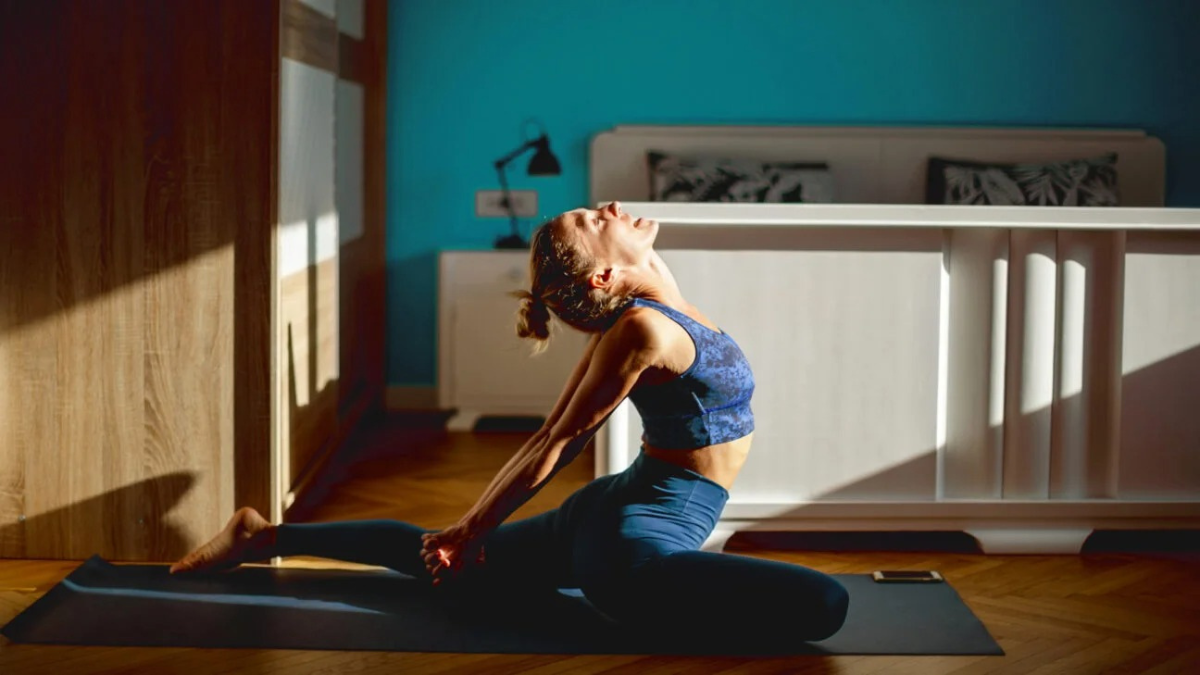
If you spend hours at a desk, in the car, or on the couch, you’ve probably felt it—that tight, achy, stubborn stiffness in your hips. Sitting for long periods shortens the hip flexors, weakens the glutes, reduces circulation, and can even affect your lower back, posture, and mobility. Over time, those “tight hips” can make everyday movement feel uncomfortable, whether you’re walking, climbing stairs, or simply standing up after a long work session.
The good news? A few intentional yoga poses can help undo some of that stiffness. Yoga works by gently opening the hip flexors, stretching the glutes and outer hips, improving blood flow, and restoring mobility to the pelvis and lower spine. Even better, you don’t need to be super flexible to benefit. With consistent practice, just 10–15 minutes a day can make a noticeable difference.
In this article, we’ll explore 7 effective yoga poses to relieve hip stiffness from sitting too long, how to do them safely, and why they work. Whether you’re a beginner or someone returning to movement after a long break, these poses can help you feel looser, more balanced, and more comfortable in your body.
Why Sitting Causes Hip Stiffness
Before diving into the poses, it helps to understand what’s happening in the body.
When you sit for long stretches:
- Hip flexors stay in a shortened position for hours
- Glutes become inactive or “sleepy”
- Hamstrings may tighten
- Lower back can compensate, leading to discomfort
- Circulation decreases, causing stiffness and a “locked” feeling
This combination often creates tension in the front, side, and back of the hips. That’s why the best yoga routine for desk-related hip tightness includes a mix of:
- Hip flexor stretches
- Outer hip openers
- Glute and piriformis stretches
- Gentle spinal mobility
- Breathwork to help muscles relax
Now let’s get into the poses.
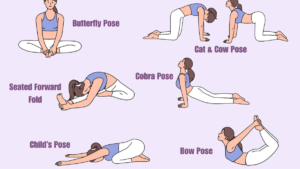
1. Cat-Cow Pose (Marjaryasana-Bitilasana)
Why it helps
Cat-Cow may seem like a spine stretch, but it’s incredibly helpful for hip stiffness because it mobilizes the pelvis and lower back—two areas that often become restricted from sitting. The movement also gently wakes up the core and improves circulation around the hips.
How to do it
- Start on all fours with wrists under shoulders and knees under hips.
- Inhale, arch your back, lift your chest and tailbone (Cow Pose).
- Exhale, round your spine, tuck your chin and pelvis (Cat Pose).
- Move slowly with your breath for 8–10 rounds.
Tips
- Keep the movement smooth and controlled.
- Focus on tilting the pelvis, not just moving the chest.
- If your wrists are sensitive, place a folded towel under them.
Benefits
- Releases lower back tension
- Improves pelvic mobility
- Gently loosens hip joints
- Prepares the body for deeper hip openers
Best for: Beginners, morning stiffness, and warming up before deeper stretches.
2. Low Lunge (Anjaneyasana)
Why it helps
This is one of the best yoga poses for people who sit all day because it directly stretches the hip flexors, especially the psoas and rectus femoris. These muscles become tight and shortened when you remain seated for long periods.
How to do it
- Start in a tabletop position.
- Step your right foot forward between your hands.
- Lower your left knee to the mat.
- Shift your hips forward gently until you feel a stretch in the front of the left hip.
- Keep your chest lifted and hands on your front thigh or raised overhead.
- Hold for 30–60 seconds, then switch sides.
Tips
- Place a folded blanket under the back knee for comfort.
- Avoid pushing too far—this should feel like a stretch, not pain.
- Slightly tuck the pelvis to deepen the hip flexor stretch.
Benefits
- Lengthens tight hip flexors
- Improves posture after sitting
- Opens the front body
- Can reduce lower back strain caused by tight hips
Best for: Desk workers, drivers, and anyone with tightness at the front of the hips.
3. Pigeon Pose (Eka Pada Rajakapotasana – Beginner Variation)
Why it helps
Pigeon Pose is a classic hip opener that targets the glutes, piriformis, and outer hips—areas that often become tight and irritated after prolonged sitting. It’s especially useful if you feel stiffness deep in the buttocks or outer hip region.
How to do it
- Start in Downward Dog or tabletop.
- Bring your right knee forward behind your right wrist.
- Angle your right shin comfortably across the mat (it does not need to be parallel).
- Extend your left leg straight back.
- Keep your hips as level as possible.
- Stay upright or fold forward over the front leg.
- Hold for 30–60 seconds, then switch sides.
Tips
- Place a yoga block or folded blanket under the front hip if it lifts off the floor.
- Keep the front knee pain-free—if you feel strain in the knee, back off.
- Try a reclined Figure 4 stretch instead if Pigeon feels too intense.
Benefits
- Deeply stretches outer hips and glutes
- Relieves sciatic-like tightness caused by sitting
- Improves hip rotation
- Helps release built-up tension in the pelvis
Best for: People who feel deep glute tightness or outer hip discomfort.
4. Bound Angle Pose (Baddha Konasana)
Why it helps
Bound Angle Pose opens the inner thighs, groin, and hips. When you sit for long periods, the hips can lose range of motion in multiple directions, not just the front. This pose encourages gentle external rotation and mobility in the hip joints.
How to do it
- Sit on the floor with your legs extended.
- Bring the soles of your feet together.
- Let your knees fall open to the sides.
- Hold your feet or ankles.
- Sit tall, lengthen your spine, and gently hinge forward if comfortable.
- Hold for 45–90 seconds.
Tips
- Sit on a folded blanket if your lower back rounds.
- Don’t force the knees down.
- Keep the chest lifted instead of collapsing forward.
Benefits
- Opens inner thighs and groin
- Encourages better hip mobility
- Improves seated posture
- Gentle and beginner-friendly
Best for: Mild hip stiffness and those who want a less intense opener.
5. Figure 4 Pose (Reclined Thread-the-Needle)
Why it helps
If Pigeon Pose feels too strong, Figure 4 is a safer, more accessible alternative. It stretches the piriformis, glutes, and outer hip, which can become compressed and tight from long periods in a chair.
How to do it
- Lie on your back with knees bent and feet flat.
- Cross your right ankle over your left thigh, just above the knee.
- Lift your left foot and thread your hands behind the left thigh.
- Gently draw the legs toward your chest.
- Keep your head and shoulders relaxed.
- Hold for 30–60 seconds, then switch sides.
Tips
- Flex the foot of the crossed leg to protect the knee.
- Keep the tailbone heavy on the floor.
- If reaching the thigh is difficult, hold the shin instead.
Benefits
- Releases deep hip tension
- Reduces glute tightness
- Safer alternative to deeper hip openers
- Can feel especially relieving after long sitting sessions
Best for: Beginners, sensitive knees, and post-work stretching.
6. Garland Pose (Malasana)
Why it helps
Garland Pose is a deep squat that helps restore a more natural hip position—something many of us lose from chair sitting. It opens the hips, groin, ankles, and lower back while also strengthening postural muscles.
How to do it
- Stand with feet slightly wider than hip-width apart.
- Turn toes out slightly.
- Bend your knees and lower into a squat.
- Bring your palms together at your chest.
- Press your elbows gently into your inner knees.
- Lift through the chest and lengthen the spine.
- Hold for 20–45 seconds.
Tips
- Place a rolled blanket under your heels if they lift.
- Sit on a yoga block if the squat feels too deep.
- Keep your weight balanced and avoid collapsing forward.
Benefits
- Opens hips and groin deeply
- Improves hip and ankle mobility
- Counters the effects of chair posture
- Encourages pelvic floor and core awareness
Best for: Intermediate beginners and those wanting functional mobility.
7. Happy Baby Pose (Ananda Balasana)
Why it helps
Happy Baby is a gentle, restorative pose that opens the hips while also relaxing the lower back. It’s especially great at the end of a long day because it combines mobility with nervous system calming.
How to do it
- Lie on your back.
- Draw your knees toward your chest.
- Hold the outsides of your feet or ankles.
- Open your knees wider than your torso.
- Gently pull the feet downward while keeping the sacrum heavy on the floor.
- Hold for 30–60 seconds, breathing deeply.
Tips
- If you can’t reach your feet, hold behind the knees or use a strap.
- Keep the lower back grounded.
- Rock gently side to side for a light massage.
Benefits
- Gently opens inner hips
- Releases lower back tension
- Encourages relaxation
- Great cooldown after sitting or workouts
Best for: Evening mobility, stress relief, and all levels.
A Simple 10-Minute Hip Relief Routine
If you want to combine these poses into a quick daily sequence, try this:
- Cat-Cow – 1 minute
- Low Lunge – 1 minute each side
- Bound Angle Pose – 1 minute
- Figure 4 Pose – 1 minute each side
- Pigeon Pose – 1 minute each side (optional if comfortable)
- Garland Pose – 30 seconds to 1 minute
- Happy Baby Pose – 1 minute
This routine can be done:
- After work
- During a lunch break
- Before bed
- After long driving or travel
Consistency matters more than intensity. Gentle daily movement is often more effective than occasional deep stretching.
Safety Tips Before You Start
While these poses are generally safe, keep these precautions in mind:
- Never force a stretch. Mild discomfort is okay; sharp pain is not.
- Use props like blankets, blocks, or straps for support.
- Move slowly if you’ve been sitting for hours.
- Breathe deeply to help muscles relax.
- If you have a hip injury, sciatica, knee pain, or recent surgery, talk to a healthcare professional or qualified yoga instructor first.
A common mistake is pushing into “tightness” aggressively. Hip muscles often respond better to steady, relaxed holds than forceful stretching.
Conclusion
Hip stiffness from sitting too long is incredibly common—but it doesn’t have to become your normal. The body adapts to how you spend your time, and if you spend much of the day seated, your hips may tighten, your glutes may weaken, and your lower back may start doing extra work. Fortunately, yoga offers a simple, effective way to reverse that pattern.
These **7 yoga poses—Cat-Cow, Low Lunge, Pigeon Pose, Bound Angle Pose, Figure 4, Garland Pose, and Happy Baby—**target the exact areas most affected by prolonged sitting. Together, they help stretch tight hip flexors, release outer hip tension, improve circulation, restore mobility, and reduce discomfort in the lower back and pelvis.
The key is consistency. You don’t need an hour-long class or advanced flexibility. Even a short daily practice can help your hips feel lighter, looser, and more mobile over time. If you sit for work, study, commuting, or gaming, think of these poses as essential maintenance for your body.
Start small, listen to your body, and make movement a regular part of your routine. Your hips—and your posture—will thank you.
FAQs
1. How long should I hold yoga poses for tight hips?
For most beginners, holding each pose for 30 to 60 seconds is a good starting point. If the pose feels comfortable, you can gradually increase to 90 seconds. Focus on breathing steadily rather than forcing a deeper stretch.
2. How often should I do these yoga poses?
Ideally, practice these poses daily or at least 4–5 times per week if you sit for long periods. Even 10 minutes a day can make a significant difference in reducing hip stiffness and improving mobility.
3. Can yoga really fix tight hips from desk work?
Yes, regular yoga can be very effective for relieving hip stiffness caused by prolonged sitting. It helps lengthen tight hip flexors, release the glutes and outer hips, improve blood flow, and restore joint mobility. However, it works best when paired with frequent movement breaks throughout the day.
4. What if Pigeon Pose hurts my knees?
If Pigeon Pose causes knee discomfort, stop immediately and switch to Reclined Figure 4 Pose instead. Figure 4 provides a similar outer hip stretch with much less pressure on the knee joint.
5. Is it better to stretch hips in the morning or evening?
Both can help:
- Morning: Great for loosening stiffness after sleep and preparing for the day
- Evening: Excellent for releasing tension built up from sitting all day
The best time is simply the time you’ll do it consistently.
6. Can tight hips cause lower back pain?
Absolutely. Tight hips—especially tight hip flexors and weak glutes—can alter pelvic alignment and force the lower back to compensate. This often leads to tension, discomfort, or pain in the lumbar region.
7. Should I do these poses before or after exercise?
These poses are often best after exercise or as a standalone mobility routine. Before exercise, use gentler dynamic movements like Cat-Cow and light lunges rather than long passive holds.