


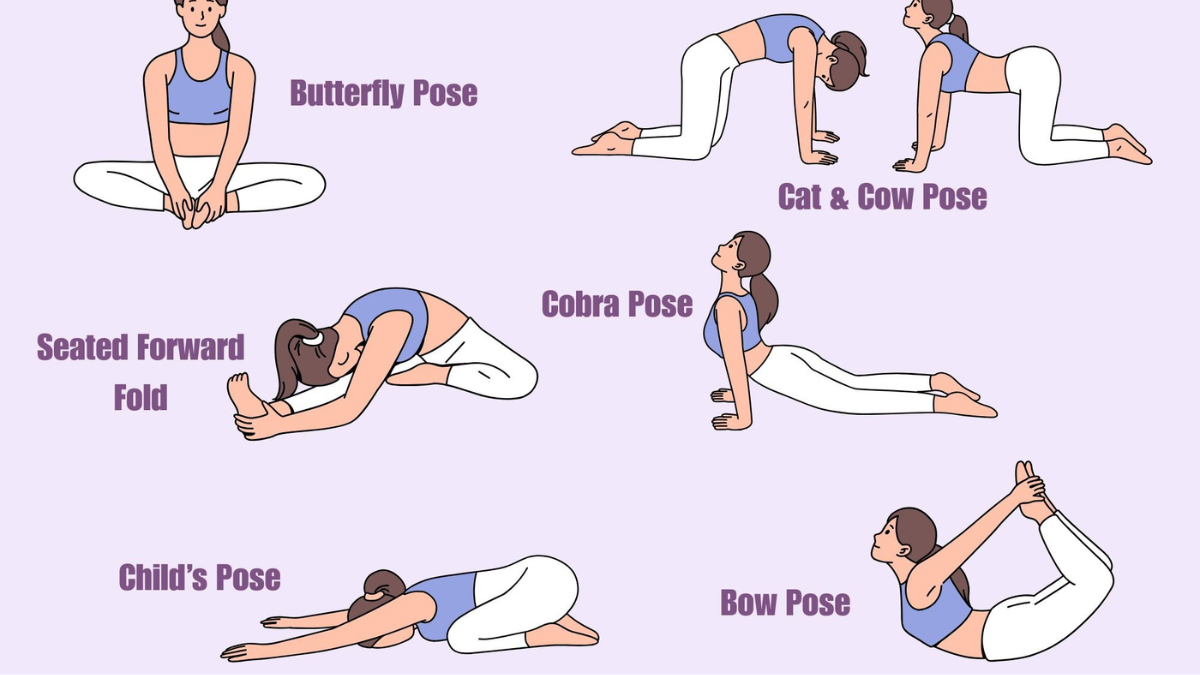
In today’s fast-paced world, mental fog, stress, and constant distraction have become almost normal. Whether you’re juggling work deadlines, family responsibilities, or simply trying to keep up with the endless stream of notifications, your mind can quickly become overwhelmed. The good news? Yoga offers a simple, natural, and highly effective way to clear your thoughts, calm your nervous system, and sharpen your focus.
Unlike intense workouts that primarily target physical strength, yoga works on the mind-body connection. Through mindful movement, conscious breathing, and intentional stillness, yoga helps reduce stress hormones, improve blood circulation, and bring awareness back to the present moment. The result is improved concentration, emotional balance, and a deeper sense of inner clarity.


If you’ve been feeling mentally drained, anxious, or unable to focus, incorporating a few yoga poses into your daily routine can make a remarkable difference. In this article, we’ll explore 6 yoga poses to unlock mental clarity, how they work, and why they’re especially effective for calming the mind and enhancing focus.
Why Yoga Helps Improve Mental Clarity
Before diving into the poses, it’s important to understand why yoga is so effective for mental sharpness.
Yoga supports mental clarity in several ways:
- Reduces stress and anxiety: Stress is one of the biggest causes of mental fog. Yoga lowers cortisol levels and activates the parasympathetic nervous system, which helps the body relax.
- Improves blood flow to the brain: Certain poses encourage healthy circulation, which can help support brain function and alertness.
- Encourages deep breathing: Controlled breathing increases oxygen supply, which can improve focus and calm scattered thoughts.
- Promotes mindfulness: Yoga trains your attention to stay in the present moment, reducing mental clutter.
- Balances the nervous system: Gentle stretches and restorative postures help reset your mind when it feels overloaded.
Even just 10–15 minutes of yoga each day can help you feel more grounded, centered, and mentally refreshed.
1. Child’s Pose (Balasana)
Child’s Pose is one of the most restorative yoga postures for calming the mind. It encourages deep relaxation, slows the breath, and gently signals the nervous system that it’s safe to rest. If your mind feels overactive or you’re emotionally overwhelmed, this pose is a great place to begin.
How to Do It:
- Kneel on the floor with your big toes touching and knees slightly apart.
- Sit back on your heels.
- Fold your torso forward and rest your forehead on the mat.
- Extend your arms forward or let them rest alongside your body.
- Breathe slowly and deeply for 1–3 minutes.
Benefits for Mental Clarity:
- Relieves mental tension and emotional stress
- Encourages introspection and grounding
- Calms the nervous system
- Helps reduce overstimulation and fatigue
Pro Tip:
Focus on lengthening your exhale. A longer exhale naturally helps the body relax and clears mental chatter.
2. Cat-Cow Pose (Marjaryasana-Bitilasana)
When your mind feels stuck or sluggish, Cat-Cow Pose is an excellent way to create movement in both the body and the mind. This flowing sequence gently mobilizes the spine while syncing movement with breath, which helps improve concentration and bring awareness into the present.
How to Do It:
- Start on all fours with your wrists under your shoulders and knees under your hips.
- Inhale, drop your belly, lift your chest, and look slightly upward (Cow Pose).
- Exhale, round your spine, tuck your chin, and draw your belly inward (Cat Pose).
- Continue flowing between these two positions for 8–10 rounds.
Benefits for Mental Clarity:
- Coordinates breath and movement for better focus
- Releases physical tension stored in the spine and shoulders
- Boosts circulation and energy flow
- Helps transition the mind from scattered to centered
Pro Tip:
Move slowly and intentionally. This is not about speed—it’s about awareness.
3. Standing Forward Fold (Uttanasana)
Standing Forward Fold is a powerful pose for quieting the mind. In yoga, forward bends are known for their calming effects because they naturally turn your attention inward. This posture can help soothe anxiety, relieve mental fatigue, and improve circulation to the head.
How to Do It:
- Stand tall with your feet hip-width apart.
- Inhale and lengthen your spine.
- Exhale as you fold forward from the hips.
- Let your head and neck relax completely.
- Place your hands on the floor, your shins, or hold opposite elbows.
- Stay for 5–10 deep breaths.
Benefits for Mental Clarity:
- Calms the brain and reduces stress
- Releases neck and shoulder tension often linked to mental strain
- Encourages introspection and emotional release
- Helps reset the nervous system
Modification:
Bend your knees generously if your hamstrings feel tight. Comfort is more important than depth.
4. Tree Pose (Vrksasana)
If your biggest challenge is distraction or lack of focus, Tree Pose is one of the best yoga poses for sharpening concentration. Balancing postures demand mental presence. The moment your mind wanders, you lose stability—which makes this pose a fantastic tool for training sustained attention.
How to Do It:
- Stand tall with your feet grounded.
- Shift your weight onto your left foot.
- Place the sole of your right foot on your inner calf or inner thigh (avoid the knee).
- Bring your hands to prayer at your chest or raise them overhead.
- Fix your gaze on one steady point in front of you.
- Hold for 5–8 breaths, then switch sides.
Benefits for Mental Clarity:
- Improves concentration and balance
- Strengthens mind-body awareness
- Builds patience and mental steadiness
- Reduces mental restlessness
Pro Tip:
Use a fixed point (called a drishti) to stabilize your focus. This simple technique can be used off the mat too when your mind feels scattered.
5. Legs-Up-the-Wall Pose (Viparita Karani)
For those days when your mind feels completely drained, Legs-Up-the-Wall Pose is like a reset button. It’s a gentle inversion that requires almost no effort but offers profound relaxation. This pose is especially helpful if you experience mental fatigue from long hours of sitting, screen time, or stress.
How to Do It:
- Sit sideways next to a wall.
- Swing your legs up the wall as you lower your back to the floor.
- Scoot your hips close to the wall as comfortable.
- Let your arms rest out to the sides or on your belly.
- Close your eyes and stay for 5–10 minutes.
Benefits for Mental Clarity:
- Relieves nervous exhaustion
- Reduces stress and anxiety
- Encourages deep rest and emotional balance
- Refreshes the mind after overstimulation
Why It Works:
This restorative pose helps the body shift out of “fight or flight” mode and into a calm, restorative state—ideal for regaining clarity.
6. Seated Meditation Pose (Sukhasana with Deep Breathing)
While technically simple, Seated Meditation Pose paired with conscious breathing can be one of the most powerful practices for mental clarity. Sometimes the clearest mind comes not from doing more, but from becoming still. Sitting in a comfortable position and focusing on your breath can help organize scattered thoughts and cultivate a peaceful inner state.
How to Do It:
- Sit cross-legged on the floor or on a cushion.
- Lengthen your spine and relax your shoulders.
- Rest your hands on your knees or in your lap.
- Close your eyes.
- Inhale deeply through your nose for a count of 4.
- Exhale slowly through your nose for a count of 6.
- Continue for 3–5 minutes.
Benefits for Mental Clarity:
- Trains the mind to focus
- Reduces racing thoughts
- Encourages emotional stability
- Builds mindfulness and self-awareness
Pro Tip:
If your mind wanders, gently bring your attention back to the breath without judgment. That act of returning is the practice.
How to Create a Simple Mental Clarity Yoga Routine
You don’t need an hour-long class to experience the mental benefits of yoga. A short, consistent routine can be incredibly effective. Here’s a simple 10–15 minute flow using the poses above:
- Child’s Pose – 2 minutes
- Cat-Cow Pose – 1–2 minutes
- Standing Forward Fold – 1 minute
- Tree Pose – 1 minute each side
- Legs-Up-the-Wall Pose – 5 minutes
- Seated Meditation with Deep Breathing – 3 minutes
This sequence works well:
- In the morning to start your day with focus
- During a midday break to reset your energy
- In the evening to release mental tension and decompress
Consistency matters more than intensity. Even a few mindful minutes each day can improve your mental clarity over time.
Tips to Maximize the Mental Benefits of Yoga
To get the most from these poses, keep these simple tips in mind:
1. Focus on Your Breath
Your breath is the bridge between body and mind. Slow, steady breathing helps calm mental noise.
2. Practice Without Distractions
Turn off notifications, dim harsh lights, and create a quiet space whenever possible.
3. Don’t Rush
Yoga for mental clarity is not about pushing hard. It’s about slowing down enough to notice what your mind needs.
4. Be Consistent
A daily 10-minute practice is often more effective than a single long session once a week.
5. End with Stillness
Always finish with a few moments of rest or meditation. This helps your nervous system integrate the benefits.
Conclusion
Mental clarity isn’t just about thinking harder—it’s about creating the right internal conditions for focus, calm, and awareness to naturally arise. Yoga offers a beautiful and accessible way to do exactly that. By combining movement, breath, and mindfulness, even simple poses can help release stress, improve concentration, and clear the mental fog that builds up from everyday life.
The 6 yoga poses to unlock mental clarity—Child’s Pose, Cat-Cow, Standing Forward Fold, Tree Pose, Legs-Up-the-Wall, and Seated Meditation Pose—each offer unique benefits for calming the nervous system and sharpening the mind. Some help you slow down and reset, while others strengthen focus and balance. Together, they create a powerful toolkit for mental well-being.
If you’re new to yoga, start small. Choose just two or three poses and practice them consistently. Over time, you may notice that your mind feels less cluttered, your stress levels decrease, and your ability to focus improves naturally.
In a world that constantly demands your attention, yoga gives you a chance to reclaim it. And sometimes, that simple act of coming back to your breath and body is all it takes to unlock real mental clarity.
FAQs
1. How often should I practice yoga for mental clarity?
For best results, practice 10–15 minutes daily or at least 3–5 times a week. Consistency is more important than long sessions.
2. Can beginners do these yoga poses?
Yes, absolutely. All six poses are beginner-friendly and can be modified to suit different flexibility and comfort levels.
3. Which yoga pose is best for reducing mental stress quickly?
Child’s Pose and Legs-Up-the-Wall Pose are especially effective for calming the mind quickly and reducing stress.
4. How long does it take to feel mentally clearer with yoga?
Many people feel calmer and more focused after just one session, but lasting benefits usually come with regular practice over several weeks.
5. Is yoga better than meditation for mental clarity?
Yoga and meditation work beautifully together. Yoga helps release physical tension and prepares the body for stillness, while meditation deepens focus and awareness.
6. Can yoga help with brain fog caused by stress?
Yes. Stress often contributes to brain fog, and yoga helps by reducing tension, improving breathing, and calming the nervous system.
7. What time of day is best for yoga to improve focus?
Morning is excellent for setting a clear tone for the day, but midday and evening sessions can also be very helpful depending on when you feel mentally drained.