


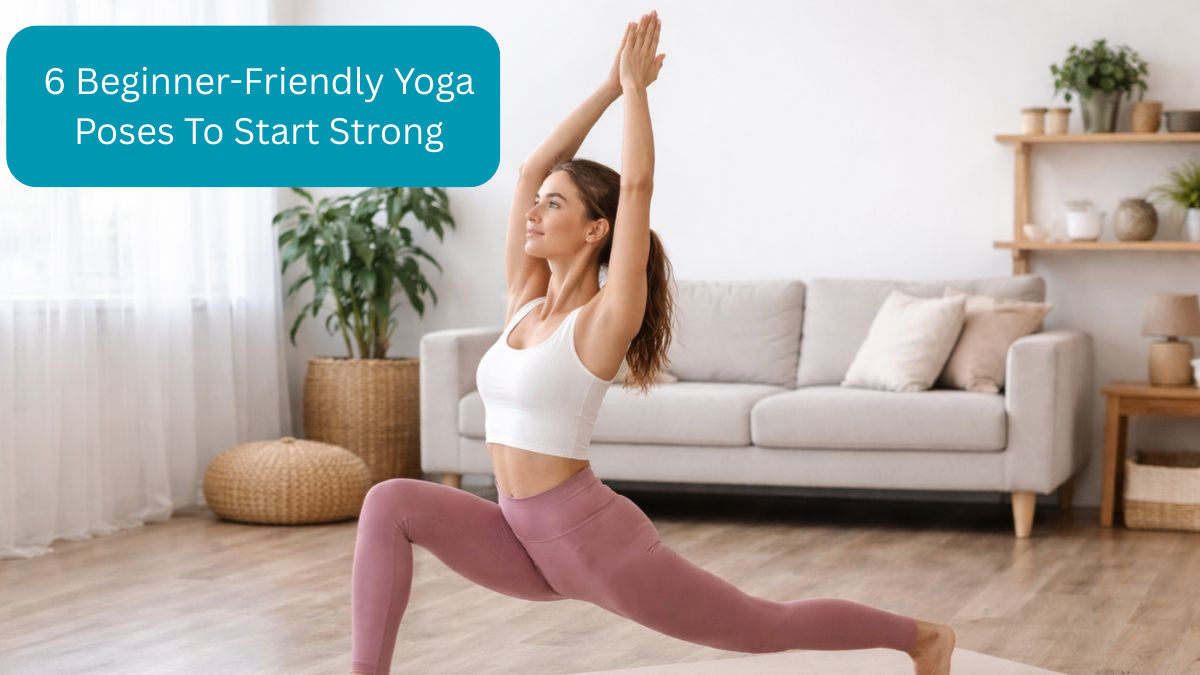
Yoga is a timeless practice that strengthens the body, calms the mind, and improves overall well-being. For beginners, starting yoga can feel intimidating due to the variety of poses and complex techniques. However, with the right guidance and a few simple poses, anyone can build a strong foundation and enjoy the benefits of yoga.
This article explores six beginner-friendly yoga poses that are perfect for newcomers. Each pose includes step-by-step instructions, benefits, and tips to ensure safe and effective practice.
1. Mountain Pose (Tadasana)

Mountain Pose, or Tadasana, is a fundamental yoga pose that may seem simple but is crucial for building stability and proper posture.
How to Do It:
- Stand with feet together and arms relaxed at your sides.
- Spread your weight evenly across both feet.
- Engage your thighs, lift your chest, and relax your shoulders.
- Inhale deeply and stretch your arms overhead, palms facing each other.
- Hold the pose for 30–60 seconds while focusing on your breath.
Benefits:
- Improves posture and alignment.
- Strengthens thighs, calves, and core muscles.
- Enhances concentration and mindfulness.
- Prepares the body for more challenging yoga poses.
Tips for Beginners:
- Keep your chin parallel to the ground.
- Avoid locking your knees; maintain a micro-bend.
- Focus on grounding through your feet for balance.
2. Downward-Facing Dog (Adho Mukha Svanasana)
Downward-Facing Dog is an essential pose that stretches the entire body while strengthening the arms and legs.
How to Do It:
- Start on your hands and knees in a tabletop position.
- Spread your fingers wide and press your palms firmly into the floor.
- Tuck your toes under and lift your hips toward the ceiling.
- Straighten your legs as much as possible without straining.
- Keep your head between your arms and gaze toward your feet.
- Hold for 30–60 seconds, breathing deeply.
Benefits:
- Stretches hamstrings, calves, and shoulders.
- Strengthens arms, wrists, and core.
- Improves circulation and energy levels.
- Relieves tension in the back and neck.
Tips for Beginners:
- Slightly bend your knees if your hamstrings feel tight.
- Focus on lengthening the spine rather than forcing your heels to the floor.
- Use a yoga block under your hands for extra support if needed.
3. Warrior I (Virabhadrasana I)
Warrior I is a standing pose that builds strength, stability, and confidence.
How to Do It:
- Stand in Mountain Pose.
- Step your right foot back about 3–4 feet and turn your right foot slightly outward.
- Bend your left knee so that it is directly above your ankle.
- Inhale and raise your arms overhead, palms facing each other.
- Keep your hips facing forward and chest lifted.
- Hold for 20–30 seconds, then switch sides.
Benefits:
- Strengthens legs, hips, and shoulders.
- Improves balance and stability.
- Opens the chest and lungs.
- Encourages focus and determination.
Tips for Beginners:
- Keep your front knee aligned with your ankle to protect the joint.
- Avoid overarching your back; engage the core.
- Use a wall for support if balancing feels difficult.
4. Cat-Cow Pose (Marjaryasana-Bitilasana)
Cat-Cow Pose is a gentle flow that warms up the spine and improves flexibility.
How to Do It:
- Begin on your hands and knees in a tabletop position.
- Inhale and arch your back, lifting your head and tailbone (Cow Pose).
- Exhale and round your spine, tucking your chin and pelvis (Cat Pose).
- Repeat the movement for 8–10 cycles, coordinating breath with motion.
Benefits:
- Increases spinal flexibility and mobility.
- Massages internal organs and improves digestion.
- Reduces stress and relieves tension in the back and neck.
- Prepares the body for other yoga poses.
Tips for Beginners:
- Move slowly and mindfully, focusing on the breath.
- Avoid forcing your spine into extreme curves.
- Keep your shoulders relaxed away from your ears.
5. Child’s Pose (Balasana)
Child’s Pose is a resting pose that allows beginners to relax and release tension.
How to Do It:
- Kneel on the floor, big toes touching, and knees apart.
- Sit back on your heels.
- Fold forward, extending your arms in front or placing them alongside your body.
- Rest your forehead on the mat.
- Hold for 1–3 minutes, breathing deeply.
Benefits:
- Gently stretches the hips, thighs, and ankles.
- Calms the mind and relieves stress.
- Promotes flexibility in the spine.
- Provides a break between challenging poses.
Tips for Beginners:
- Place a cushion or folded blanket under your hips for comfort.
- Keep your arms stretched if it feels relaxing, or fold them for more support.
- Focus on breathing into your back for deeper relaxation.
6. Seated Forward Bend (Paschimottanasana)
Seated Forward Bend stretches the back and hamstrings while promoting relaxation.
How to Do It:
- Sit on the floor with legs extended straight ahead.
- Inhale and lengthen your spine.
- Exhale and hinge at your hips to fold forward over your legs.
- Reach for your feet, ankles, or shins depending on flexibility.
- Hold for 30–60 seconds while breathing deeply.
Benefits:
- Stretches the spine, hamstrings, and shoulders.
- Improves digestion and stimulates internal organs.
- Reduces anxiety and promotes mental calmness.
- Enhances flexibility over time.
Tips for Beginners:
- Keep your knees slightly bent if hamstrings are tight.
- Use a yoga strap around your feet to help reach forward.
- Focus on elongating the spine instead of reaching the toes.
Tips for Beginners Starting Yoga
Starting yoga as a beginner requires patience and consistency. Here are some practical tips:
- Start Slowly: Focus on mastering a few poses rather than attempting all advanced positions at once.
- Use Props: Yoga blocks, straps, and cushions can help maintain alignment and comfort.
- Practice Daily: Even 15–20 minutes a day can build strength, flexibility, and habit.
- Focus on Breath: Breathing deeply and mindfully enhances the benefits of every pose.
- Listen to Your Body: Avoid pushing beyond your limits to prevent injury.
- Stay Consistent: Regular practice leads to better physical and mental results over time.
Benefits of Yoga for Beginners
Yoga provides holistic benefits that touch the body, mind, and spirit.
Physical Benefits:
- Increased flexibility and mobility
- Improved posture and balance
- Strengthened muscles and joints
- Boosted immunity and circulation
Mental Benefits:
- Reduced stress and anxiety
- Enhanced concentration and focus
- Increased mindfulness and self-awareness
- Improved emotional stability
Spiritual Benefits:
- Greater inner peace and calmness
- Enhanced connection to self
- Encouragement to live mindfully and intentionally
Common Mistakes Beginners Should Avoid
- Skipping warm-up exercises
- Holding the breath during poses
- Forcing the body into uncomfortable positions
- Neglecting proper alignment
- Practicing only strength or flexibility poses without balance
By being mindful of these mistakes, beginners can prevent injury and enjoy the full benefits of yoga.
Conclusion
Starting yoga can feel challenging, but the six beginner-friendly poses outlined in this article—Mountain Pose, Downward-Facing Dog, Warrior I, Cat-Cow Pose, Child’s Pose, and Seated Forward Bend—provide a strong foundation for a lasting practice.
By practicing these poses consistently, beginners can improve flexibility, strength, balance, and mental clarity. Yoga is not just an exercise; it is a journey toward holistic health and mindfulness. With patience, discipline, and daily practice, anyone can cultivate a sense of inner peace, confidence, and well-being.
Remember, yoga is about progress, not perfection. Starting with these simple poses can lead to long-term benefits for the body, mind, and spirit, making you stronger, calmer, and more grounded in everyday life.
FAQs About Beginner Yoga Poses
1. How often should beginners practice yoga?
Beginners can start with 15–30 minutes daily, gradually increasing time and intensity as flexibility and strength improve.
2. Do I need special equipment for yoga?
A yoga mat is sufficient for most poses. Props like blocks, straps, and cushions can be added for support.
3. Can yoga help reduce stress?
Yes, yoga combines movement, breathwork, and meditation, which are highly effective for reducing stress and promoting mental calmness.
4. Is flexibility necessary to start yoga?
No. Yoga is suitable for all body types. Beginners should focus on gradual stretching and proper alignment rather than achieving extreme flexibility.
5. Can beginners practice yoga at home?
Absolutely. These six poses can be safely performed at home. Following online tutorials or attending beginner classes can also help with technique.
6. How long does it take to see results from yoga?
With consistent practice, beginners may notice improvements in flexibility, strength, and stress levels within 4–6 weeks.