


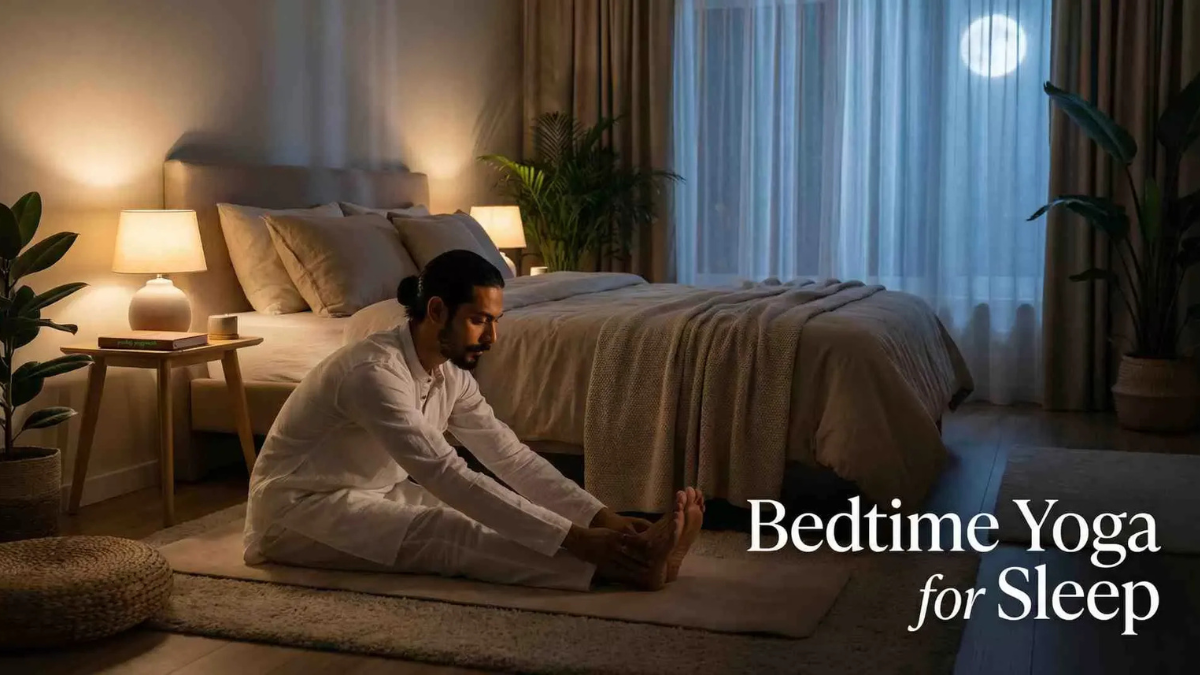
A good night’s sleep can feel impossible after a long, stressful day. Racing thoughts, tight hips, tense shoulders, and hours spent staring at screens often leave the body alert when it should be winding down. The good news is that you don’t need an hour-long yoga class or an advanced routine to prepare your body for rest. Just a few gentle bedtime stretches can calm the nervous system, release physical tension, and signal to your mind that it’s time to sleep.
This simple 5-minute bedtime yoga routine is designed for beginners and busy people alike. These six poses are easy, soothing, and can be done right on your bedroom floor or even on your bed. The goal isn’t to “work out” before bed—it’s to slow down, breathe deeply, and relax. When paired with mindful breathing, these stretches may help reduce stress, ease stiffness, and support deeper, more restful sleep.

In this article, you’ll discover 6 bedtime yoga stretches that can help you sleep faster, along with step-by-step instructions, benefits, safety tips, and answers to common questions. If you’ve been looking for a natural way to improve your nighttime routine, this is a great place to start.
Why Bedtime Yoga Helps You Sleep
Before diving into the stretches, it helps to understand why yoga can be so effective at night. Gentle yoga activates the parasympathetic nervous system, often called the “rest and digest” system. This is the opposite of the stress-driven “fight or flight” response that keeps your body alert.
When you practice relaxing yoga before bed, you may experience:
- Reduced muscle tension in the neck, shoulders, back, and hips
- Slower breathing and heart rate
- Lower stress and anxiety levels
- Improved circulation
- A calmer, more grounded mental state
- Easier transition into sleep
The key is to choose slow, restorative movements rather than intense or energizing poses. These six stretches are ideal because they gently unwind the body without overstimulating it.
1. Child’s Pose (Balasana)
Why it helps: Child’s Pose is one of the most calming yoga postures. It gently stretches the hips, thighs, lower back, and spine while encouraging deep breathing. The folded shape naturally creates a sense of safety and comfort, making it perfect for bedtime.
How to do it:
- Kneel on the floor or bed with your big toes touching and knees slightly apart.
- Sit your hips back toward your heels.
- Fold your torso forward and extend your arms out in front of you, or rest them alongside your body.
- Let your forehead rest on the floor, a pillow, or folded blanket.
- Take slow, deep breaths for 30–45 seconds.
Benefits:
- Relieves lower back tension
- Gently opens hips
- Calms the nervous system
- Encourages slow, diaphragmatic breathing
Tip:
If your hips don’t reach your heels comfortably, place a pillow between your hips and heels for support.
2. Cat-Cow Stretch (Marjaryasana-Bitilasana)
Why it helps: Cat-Cow is a gentle spinal flow that releases built-up tension in the back, shoulders, and neck. It also helps coordinate movement with breath, which is highly effective for relaxing the body before sleep.
How to do it:
- Come onto all fours with your wrists under shoulders and knees under hips.
- Inhale as you drop your belly, lift your chest, and gently raise your gaze (Cow Pose).
- Exhale as you round your spine, tuck your chin, and draw your belly in (Cat Pose).
- Continue moving slowly with your breath for 5–8 rounds or about 45 seconds.
Benefits:
- Mobilizes the spine
- Releases tension in shoulders and neck
- Improves breath awareness
- Helps transition from mental busyness to physical calm
Tip:
Keep the movement slow and fluid. Avoid pushing into any sharp discomfort.
3. Seated Forward Fold (Paschimottanasana – Gentle Variation)
Why it helps: Forward folds are naturally soothing because they encourage introspection and relaxation. A gentle seated forward fold stretches the hamstrings, calves, and lower back while quieting the mind.
How to do it:
- Sit with your legs extended in front of you.
- Keep a soft bend in the knees if needed.
- Inhale to lengthen your spine.
- Exhale and slowly fold forward from the hips, reaching toward your shins, ankles, or feet.
- Let your head and neck relax.
- Hold for 30–45 seconds while breathing deeply.
Benefits:
- Lengthens the back body
- Reduces tension in the lower back
- Encourages mental stillness
- May ease restlessness before bed
Tip:
Don’t worry about touching your toes. The goal is relaxation, not flexibility. Place a pillow on your legs and rest your torso on it for a more restorative version.
4. Supine Spinal Twist (Supta Matsyendrasana)
Why it helps: Twists are excellent for releasing tension in the spine and promoting relaxation. This reclined version is especially sleep-friendly because it allows your whole body to soften into the floor.
How to do it:
- Lie on your back with your legs extended.
- Hug your right knee into your chest.
- Gently guide the right knee across your body toward the left side.
- Extend your right arm out to the side and turn your head gently to the right, if comfortable.
- Keep both shoulders relaxed toward the floor.
- Hold for 20–30 seconds, then switch sides.
Benefits:
- Relieves spinal tension
- Stretches the lower back and outer hips
- Promotes deep relaxation
- Can ease stiffness from sitting all day
Tip:
Place a pillow under the bent knee if it doesn’t comfortably reach the floor.
5. Legs Up the Wall (Viparita Karani)
Why it helps: This is one of the best yoga poses for sleep and stress relief. Legs Up the Wall reduces swelling in the legs, encourages blood flow back toward the heart, and deeply relaxes the nervous system. It’s incredibly restorative and requires almost no effort.
How to do it:
- Sit sideways next to a wall.
- Gently swing your legs up the wall as you lower your back onto the floor.
- Scoot your hips as close to the wall as feels comfortable.
- Rest your arms by your sides with palms facing up.
- Close your eyes and breathe slowly for 45–60 seconds.
Benefits:
- Relieves tired legs and feet
- Reduces physical fatigue
- Calms the mind
- Supports circulation and relaxation
Tip:
If you don’t have wall space, place your calves on a chair or the edge of the bed for a similar effect.
6. Reclining Butterfly Pose (Supta Baddha Konasana)
Why it helps: This heart-opening yet deeply restful pose gently stretches the inner thighs and hips while allowing the chest to open for fuller breathing. It’s a beautiful final pose to signal the body that sleep is near.
How to do it:
- Lie on your back.
- Bring the soles of your feet together and let your knees fall open to the sides.
- Place pillows or folded blankets under your knees for support if needed.
- Rest one hand on your belly and one hand on your chest.
- Breathe slowly and stay here for 45–60 seconds.
Benefits:
- Opens hips and groin gently
- Encourages deeper breathing
- Releases emotional and physical tension
- Helps the body feel safe and relaxed
Tip:
This pose should feel soft and supported. If it feels too intense in the hips, bring your feet farther away from your body.
A Simple 5-Minute Bedtime Yoga Routine
If you want to follow these poses as a quick sequence, here’s an easy structure:
- Child’s Pose – 45 seconds
- Cat-Cow Stretch – 45 seconds
- Seated Forward Fold – 45 seconds
- Supine Spinal Twist – 30 seconds each side
- Legs Up the Wall – 60 seconds
- Reclining Butterfly Pose – 60 seconds
Total time: About 5 minutes
If you have extra time, stay in any pose longer. The more relaxed and supported you feel, the better.
Tips to Make Bedtime Yoga More Effective
To get the most out of your nighttime yoga routine, keep these simple tips in mind:
1. Keep the lights dim
Bright lights can interfere with melatonin production. Soft lighting or a bedside lamp can make the experience more calming.
2. Breathe slowly
Try inhaling for a count of 4 and exhaling for a count of 6. Longer exhales help your body shift into relaxation mode.
3. Avoid intense stretching
Bedtime yoga should feel gentle and comforting—not like a workout. Skip anything vigorous or overly stimulating.
4. Use props
Pillows, blankets, and bolsters make poses more supportive and help your muscles fully relax.
5. Stay consistent
Doing the same short routine each night creates a sleep cue for your body. Over time, your mind begins to associate these stretches with rest.
6. Put your phone away
Avoid scrolling right before or during your routine. The goal is to quiet your nervous system, not re-stimulate it.
Who Should Be Careful?
Bedtime yoga is generally safe, but a few people should take extra care:
- If you have recent injuries in the back, hips, knees, or neck
- If you experience severe pain during any pose
- If you have glaucoma or conditions where inversion-like positions need caution (such as Legs Up the Wall)
- If you’re pregnant, some poses may need modification depending on trimester
- If you have chronic medical conditions, it’s wise to check with your healthcare provider before starting a new routine
Always listen to your body. Gentle discomfort from stretching is okay; sharp pain is not.
Conclusion
Falling asleep faster doesn’t always require supplements, sleep apps, or complicated routines. Sometimes, the simplest solution is giving your body a few quiet minutes to release the day. These 6 bedtime yoga stretches—Child’s Pose, Cat-Cow, Seated Forward Fold, Supine Spinal Twist, Legs Up the Wall, and Reclining Butterfly—are easy, beginner-friendly, and incredibly effective for calming the body and mind.
In just 5 minutes, you can reduce tension, slow your breathing, and create a soothing bedtime ritual that supports better sleep naturally. The beauty of this routine is its simplicity: no special equipment, no advanced flexibility, and no pressure to perform. Just gentle movement, mindful breathing, and a chance to unwind.
If sleep has been difficult lately, try practicing this routine consistently for a week. You may be surprised by how quickly your body begins to respond. A peaceful night often starts with a peaceful transition—and these stretches can be exactly that.
FAQs
1. Can yoga really help me fall asleep faster?
Yes, gentle bedtime yoga may help by relaxing the nervous system, reducing muscle tension, and slowing your breath. While results vary, many people find it easier to fall asleep after a short restorative routine.
2. How long should I do bedtime yoga?
Even 5 minutes can be effective. If you have more time, 10–15 minutes can be even more relaxing. The key is consistency and choosing calming poses.
3. Is bedtime yoga okay for beginners?
Absolutely. The stretches in this routine are beginner-friendly and can be modified with pillows or blankets for extra support.
4. Should I do bedtime yoga on the bed or floor?
Either works. A yoga mat or carpeted floor offers more stability, but many of these poses can also be done comfortably on a firm bed.
5. Can I do this routine every night?
Yes, in most cases. A gentle bedtime yoga routine is safe for daily practice and may become a helpful sleep habit over time.
6. What if I’m not flexible?
That’s completely fine. You do not need to be flexible to benefit from yoga. Use props, bend your knees, and focus on comfort rather than depth.
7. Which yoga pose is best for sleep?
Many people find Legs Up the Wall and Child’s Pose especially effective because they calm the body quickly and require minimal effort.
8. Can bedtime yoga replace sleep medication?
Bedtime yoga can be a helpful natural sleep support, but it should not replace prescribed medication without medical guidance. If you struggle with chronic insomnia, consult a healthcare professional.