


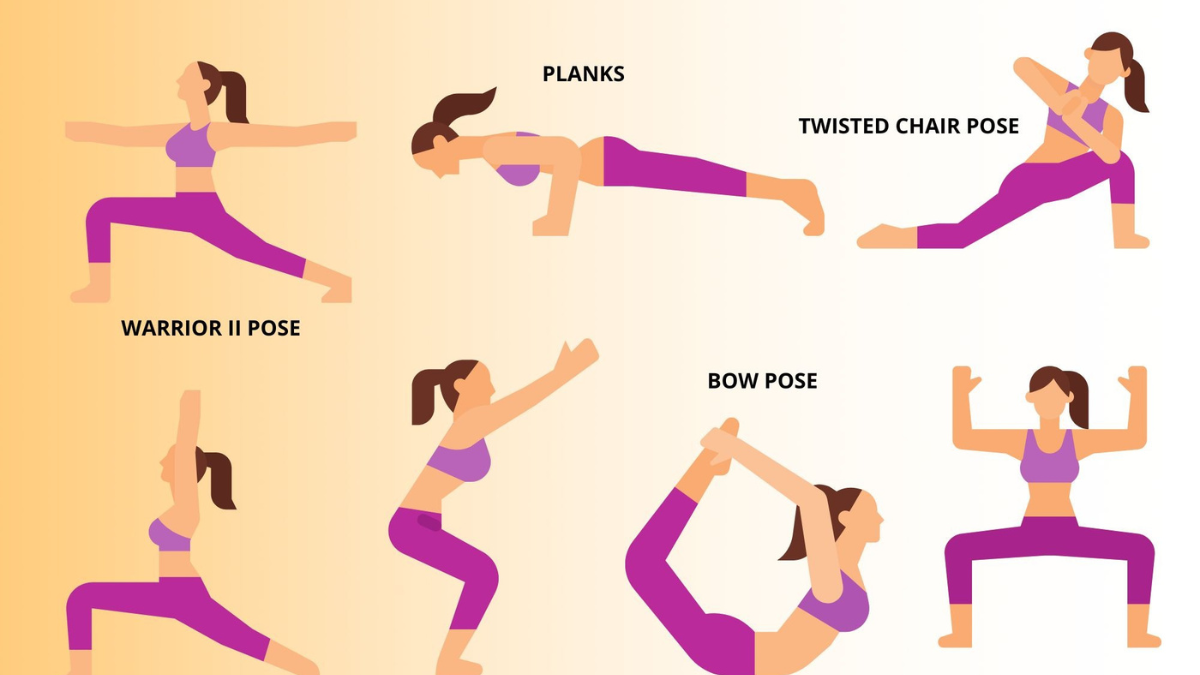
If you’re looking for a natural, sustainable, and beginner-friendly way to reduce belly fat, yoga can be a great addition to your fitness routine. While no single yoga pose can “spot reduce” fat from your stomach alone, certain asanas help by strengthening your core, improving digestion, lowering stress hormones, and boosting overall calorie burn. Over time, this can support healthy fat loss—including around the belly.
In today’s fast-paced lifestyle, belly fat often builds up because of stress, poor sleep, overeating, long sitting hours, and lack of movement. Yoga addresses all of these issues in a holistic way. It doesn’t just target the body; it also calms the mind, improves posture, and helps you build consistency. Unlike extreme workouts that may feel overwhelming, yoga can be practiced at your own pace and is often easier to maintain long term.


In this article, we’ll explore 5 yoga poses that help reduce belly fat slowly, how to perform them correctly, their benefits, and tips for best results. The keyword here is slowly—because healthy fat loss takes time, patience, and regular practice.
Why Yoga Helps With Belly Fat
Before diving into the poses, it’s important to understand one truth: belly fat cannot be reduced overnight. Quick fixes, crash diets, and miracle claims often disappoint. Yoga helps in a different way:
- Activates the core muscles, especially the abs and obliques
- Improves digestion, which can reduce bloating and support metabolism
- Reduces stress, lowering cortisol levels linked to belly fat storage
- Encourages mindful eating, helping control cravings and overeating
- Supports better sleep, which is essential for weight regulation
When combined with a balanced diet, hydration, walking, and adequate rest, yoga can be a powerful tool for gradual belly fat reduction.
1. Bhujangasana (Cobra Pose)
Why It Helps

Bhujangasana, or Cobra Pose, is one of the most effective yoga poses for beginners who want to work on the abdominal area. This pose stretches the front of the body, tones the abdomen, and strengthens the lower back. It also improves posture, which can make the stomach look flatter over time.
How to Do It
- Lie flat on your stomach with your legs extended and feet together.
- Place your palms under your shoulders.
- Keep your elbows close to your body.
- Inhale and slowly lift your chest upward.
- Use your back muscles more than your hands.
- Keep your shoulders relaxed and look slightly upward.
- Hold for 15–30 seconds while breathing normally.
- Exhale and gently return to the floor.
Repetitions
- Repeat 3–5 times
Benefits
- Strengthens abdominal muscles
- Improves flexibility in the spine
- Stimulates digestive organs
- Helps reduce stiffness from long sitting hours
- Supports a toned midsection with regular practice
Beginner Tip
Avoid forcing the lift too high. Even a small lift is beneficial if done with proper form.
2. Naukasana (Boat Pose)
Why It Helps
If your goal is to engage the abdominal muscles directly, Naukasana (Boat Pose) is a must. This pose strongly activates the core, hip flexors, and lower abs, making it one of the best yoga poses for toning the belly area.
How to Do It
- Lie flat on your back with your arms by your sides.
- Keep your legs straight and together.
- Inhale deeply.
- As you exhale, lift your chest and legs off the floor at the same time.
- Stretch your arms forward toward your feet.
- Balance on your sitting bones while keeping your spine long.
- Keep your gaze toward your toes.
- Hold the pose for 10–20 seconds.
- Exhale and slowly lower your body.
Repetitions
- Repeat 3–4 times
Benefits
- Strengthens the entire abdominal region
- Improves balance and concentration
- Tones the thighs and hips
- Enhances stamina
- Helps tighten the waistline over time
Beginner Tip

If lifting both legs is difficult, bend your knees slightly or lift one leg at a time while building strength.
3. Kumbhakasana (Plank Pose)
Why It Helps
Kumbhakasana, or Plank Pose, may look simple, but it is one of the best full-body strengthening poses in yoga. It works the abs, shoulders, arms, back, and legs all at once. Since it engages the core intensely, it can support belly toning and improve overall strength.
How to Do It
- Start on all fours (tabletop position).
- Step your feet back one at a time.
- Keep your body in a straight line from head to heels.
- Place your wrists directly under your shoulders.
- Tighten your abdominal muscles.
- Avoid dropping your hips or lifting them too high.
- Hold for 20–40 seconds while breathing steadily.
- Gently lower your knees to rest.
Repetitions
- Repeat 3 times
Benefits
- Builds strong core muscles
- Improves posture and stability
- Strengthens the arms and shoulders
- Boosts endurance
- Helps improve metabolism through muscle engagement
Beginner Tip
Start with a knee plank if the full plank feels too hard. Consistency matters more than perfection.
4. Pavanamuktasana (Wind-Relieving Pose)
Why It Helps
Sometimes what looks like belly fat is partly bloating and poor digestion. Pavanamuktasana is excellent for releasing trapped gas, improving digestion, and gently compressing the abdomen. While it may not burn many calories, it supports a flatter stomach by improving gut function and reducing abdominal discomfort.
How to Do It
- Lie on your back with your legs extended.
- Inhale deeply.
- As you exhale, bend both knees and bring them toward your chest.
- Wrap your arms around your legs and hug your knees in.
- If comfortable, lift your head and bring your nose toward your knees.
- Hold for 20–30 seconds while breathing normally.
- Release and return to the starting position.
Repetitions
- Repeat 3–5 times
Benefits
- Improves digestion
- Helps relieve gas and bloating
- Massages the abdominal organs
- Gently tones the lower belly
- Eases lower back tension
Beginner Tip
If lifting the head strains your neck, keep it on the floor. The pose still works well.
5. Ustrasana (Camel Pose)
Why It Helps
Ustrasana (Camel Pose) is a deep backbend that stretches the entire front body, including the abdomen. It improves posture, opens the chest, and strengthens the back and thighs. A better posture can visually reduce the appearance of a protruding belly, while the abdominal stretch stimulates digestive organs.
How to Do It
- Kneel on the floor with your knees hip-width apart.
- Place your hands on your lower back for support.
- Press your hips slightly forward.
- Inhale and lift your chest upward.
- Slowly lean back and, if comfortable, place your hands on your heels.
- Keep your neck relaxed but avoid collapsing.
- Hold for 15–20 seconds.
- Bring your hands back to your lower back and slowly rise up.
Repetitions
- Repeat 2–3 times
Benefits
- Stretches and tones the abdominal region
- Improves posture and spinal flexibility
- Opens the chest and shoulders
- Stimulates digestion
- Helps counter the effects of prolonged sitting
Beginner Tip
Keep your hands on your lower back instead of reaching for your heels if you’re new to backbends.
Best Routine to Practice These 5 Poses
To get the best results, practice these poses in a simple sequence:
- Bhujangasana – 3 rounds
- Naukasana – 3 rounds
- Kumbhakasana – 3 rounds
- Pavanamuktasana – 3 rounds
- Ustrasana – 2 rounds
Suggested Duration
- Total time: 15–20 minutes daily
- Best time: Morning on an empty stomach or evening 3–4 hours after meals
Important Tips for Reducing Belly Fat With Yoga
Yoga works best when supported by healthy lifestyle habits. Here are some simple tips:
1. Be Consistent
Practicing yoga 3–5 days a week is far more effective than doing a long session once in a while.
2. Eat Mindfully
Reduce:
- Sugary drinks
- Fried foods
- Processed snacks
- Late-night overeating
Include:
- Fruits and vegetables
- Protein-rich meals
- Whole grains
- Plenty of water
3. Walk Daily
Even 20–30 minutes of brisk walking can improve calorie burn and support fat loss.
4. Manage Stress
High stress can increase cortisol, a hormone linked to abdominal fat. Yoga, meditation, and deep breathing help lower stress.
5. Sleep Well
Aim for 7–8 hours of sleep. Poor sleep can lead to cravings and slower fat loss.
Common Mistakes to Avoid
When practicing yoga for belly fat reduction, avoid these mistakes:
- Expecting instant results
- Holding poses with poor posture
- Skipping warm-up and cool-down
- Practicing right after a heavy meal
- Overdoing advanced poses too soon
- Ignoring diet and relying only on yoga
Remember, yoga is a supportive practice, not a magic shortcut.
Conclusion
Reducing belly fat is a journey that requires patience, consistency, and a balanced lifestyle. Yoga can absolutely help—but it works slowly and naturally, which is often the healthiest and most sustainable way.
The five poses covered in this article—Bhujangasana, Naukasana, Kumbhakasana, Pavanamuktasana, and Ustrasana—can help by strengthening your core, improving digestion, correcting posture, and reducing stress. While they won’t melt belly fat overnight, they can create noticeable changes over time when practiced regularly.
If you’re just starting out, focus on proper form, gentle progress, and daily consistency. Pair your yoga routine with smart eating, walking, hydration, and good sleep. Over weeks and months, you’ll likely notice not only a slimmer waistline, but also better energy, flexibility, and overall well-being.
The real secret is simple: slow progress is still progress. Stick with it, and your body will thank you.
FAQs
1. Can yoga alone reduce belly fat?
Yoga can help reduce belly fat, but it works best when combined with a healthy diet, regular movement, and good sleep. It supports fat loss by improving metabolism, digestion, and stress levels.
2. How long does it take to see results?
Results vary by person, but with consistent practice 4–5 times a week, you may start noticing changes in 4–8 weeks, especially in posture, bloating, and core strength.
3. Which yoga pose is best for belly fat?
Naukasana (Boat Pose) and Plank Pose are especially effective because they strongly engage the abdominal muscles. However, the best results come from practicing multiple poses together.
4. Is yoga better than gym workouts for belly fat?
Yoga and gym workouts both help. Gym workouts may burn more calories faster, while yoga offers a gentler, holistic, and sustainable approach that also reduces stress and improves digestion.
5. Can beginners do these yoga poses?
Yes, all five poses can be modified for beginners. Start slowly, hold for shorter durations, and focus on correct alignment.
6. Should I do yoga in the morning or evening?
Morning is often best, especially on an empty stomach. But evening works too—as long as you wait 3–4 hours after a meal.
7. Does yoga reduce bloating as well as fat?
Yes. Poses like Pavanamuktasana can help relieve gas and improve digestion, which may reduce bloating and make your stomach feel flatter.