


If your hips feel stiff after long hours of sitting, workouts, commuting, or stress-heavy days, you’re not alone. The hips are one of the body’s most overworked and under-cared-for areas. They carry your weight, stabilize your spine, support movement, and often store a surprising amount of tension. When the hips are tight, you may notice discomfort not only in the pelvis, but also in the lower back, knees, hamstrings, and even posture.
The good news? Yoga offers a powerful and gentle way to release built-up tightness and create the deep hip opening your body has been craving. Hip-opening yoga poses improve flexibility, mobility, circulation, and body awareness while helping you feel more grounded and relaxed.

In this article, we’ll explore 11 yoga poses for deep hip opening, how to do them safely, their benefits, and tips to make your practice more effective. Whether you’re a beginner or experienced yogi, these poses can help you move more freely and feel better in your body.
Why Hip Openers Matter
Before diving into the poses, it helps to understand why hip-opening stretches are so valuable.
Your hips are complex ball-and-socket joints surrounded by powerful muscles, including the hip flexors, glutes, adductors, abductors, and deep rotators. Modern lifestyles—especially prolonged sitting—can shorten the hip flexors and weaken surrounding muscles. On the other hand, intense exercise can also create tightness and overuse.

Benefits of hip-opening yoga poses include:
- Increased flexibility and mobility in the hips and pelvis
- Relief from lower back tension caused by tight hip flexors
- Improved posture and alignment
- Better circulation in the lower body
- Reduced stiffness from sitting for long periods
- Greater ease in walking, squatting, and athletic movement
- Emotional release and relaxation, since many people feel stress held in the hips
The key is to approach hip openers with patience. Deep release comes from consistency, breath, and mindful movement—not forcing yourself into extreme range.
11 Yoga Poses for Deep Hip Opening
1. Bound Angle Pose (Baddha Konasana)
Why it works:
This classic seated hip opener targets the inner thighs, groin, and hip adductors while encouraging a gentle external rotation in the hips.
How to do it:
- Sit tall on the floor.
- Bring the soles of your feet together.
- Let your knees drop out to the sides.
- Hold your feet or ankles.
- Lengthen your spine and hinge slightly forward if comfortable.
Tips:
- Sit on a folded blanket if your lower back rounds.
- Avoid pressing your knees down forcefully.
Hold for: 30–60 seconds
2. Butterfly Forward Fold
Why it works:
A deeper variation of Bound Angle Pose, this stretch intensifies the release in the groin, inner thighs, and lower hips.
How to do it:
- Start in Bound Angle Pose.
- Inhale to lengthen the spine.
- Exhale and slowly fold forward from the hips.
- Rest on your forearms or a bolster if needed.
Tips:
- Keep the movement slow and controlled.
- Focus on breath rather than depth.
Hold for: 45–90 seconds
3. Low Lunge (Anjaneyasana)
Why it works:
This pose deeply stretches the hip flexors—especially the psoas and quadriceps—making it ideal for people who sit a lot.
How to do it:
- Step one foot forward into a lunge.
- Lower the back knee to the floor.
- Keep the front knee stacked over the ankle.
- Lift your torso upright.
- Raise your arms overhead if comfortable.
Tips:
- Place padding under the back knee.
- Tuck the pelvis slightly to intensify the hip flexor stretch.
Hold for: 30–60 seconds each side
4. Lizard Pose (Utthan Pristhasana)
Why it works:
Lizard Pose is a powerful hip opener that targets the hip flexors, groin, hamstrings, and inner thighs all at once.
How to do it:
- Start in a low lunge.
- Bring both hands inside the front foot.
- Walk the front foot slightly wider.
- Stay on your hands or lower to your forearms.
Tips:
- Keep the back leg active.
- Use yoga blocks under your hands if the floor feels too far away.
Hold for: 30–60 seconds each side
5. Pigeon Pose (Eka Pada Rajakapotasana Prep)
Why it works:
One of the most beloved deep hip openers, Pigeon targets the glutes, piriformis, and outer hips.
How to do it:
- From Downward Dog, bring one knee toward the same-side wrist.
- Angle the shin comfortably across the mat.
- Extend the back leg straight behind you.
- Keep the hips as level as possible.
- Stay upright or fold forward over the front leg.
Tips:
- Place a block or folded blanket under the front hip for support.
- If you feel knee pain, back out immediately.
Hold for: 45–90 seconds each side
6. Figure Four Pose (Reclined Thread the Needle)
Why it works:
This is a gentler alternative to Pigeon Pose and excellent for beginners or anyone with knee sensitivity.
How to do it:
- Lie on your back with knees bent.
- Cross one ankle over the opposite thigh.
- Thread your hands behind the bottom thigh.
- Draw the legs toward your chest.
Tips:
- Flex the lifted foot to protect the knee.
- Keep your shoulders relaxed.
Hold for: 30–60 seconds each side
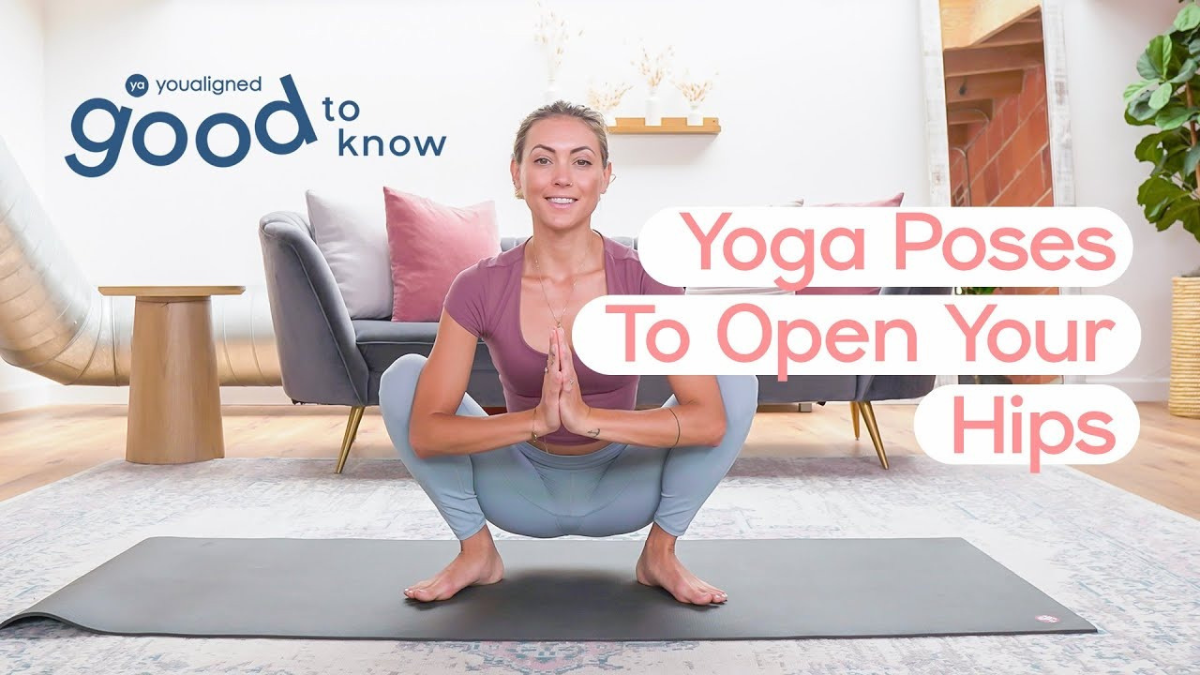
7. Garland Pose (Malasana)
Why it works:
This deep squat opens the hips, groin, ankles, and lower back while improving pelvic mobility.
How to do it:
- Stand with feet slightly wider than hip-width.
- Turn the toes out slightly.
- Lower into a deep squat.
- Bring palms together at the heart.
- Use elbows to gently widen the knees.
Tips:
- Sit on a block if your heels lift or balance is difficult.
- Keep the chest lifted.
Hold for: 30–60 seconds
8. Frog Pose (Mandukasana Variation)
Why it works:
Frog Pose is an intense inner thigh and groin opener that creates a deep stretch across the hips.
How to do it:
- Come onto hands and knees.
- Widen your knees apart.
- Keep ankles in line with knees.
- Lower onto forearms.
- Maintain a neutral spine.
Tips:
- Place padding under knees.
- Move slowly—this pose can be very strong.
Hold for: 20–45 seconds to start
9. Happy Baby Pose (Ananda Balasana)
Why it works:
This playful pose opens the hips while releasing the lower back and gently stretching the inner thighs.
How to do it:
- Lie on your back.
- Bend your knees toward your chest.
- Grab the outsides of your feet or shins.
- Stack knees over ankles.
- Gently draw the knees toward the armpits.
Tips:
- Keep the tailbone grounded.
- Rock side to side for a soothing massage.
Hold for: 30–60 seconds
10. Double Pigeon Pose (Fire Log Pose / Agnistambhasana)
Why it works:
This advanced seated posture deeply targets the outer hips and glutes, often producing a profound stretch.
How to do it:
- Sit with one shin parallel to the front of the mat.
- Stack the other shin on top, ankle over knee and knee over ankle as much as possible.
- Sit evenly on both sitting bones.
- Fold forward slightly if comfortable.
Tips:
- Place blocks under the top knee if it hovers high.
- If this feels too intense, return to Figure Four Pose.
Hold for: 30–60 seconds each side
11. Wide-Legged Seated Forward Fold (Upavistha Konasana)
Why it works:
This pose opens the inner thighs, hamstrings, and pelvis while creating spaciousness across the hips.
How to do it:
- Sit with legs extended wide apart.
- Flex the feet.
- Sit tall through the spine.
- Fold forward gently from the hips.
Tips:
- Sit on a folded blanket to tilt the pelvis forward.
- Avoid collapsing the chest.
Hold for: 45–90 seconds
Tips for Practicing Deep Hip Openers Safely
Deep hip-opening yoga should feel intense but never sharp or painful. Because the hips are such a large and sensitive joint complex, proper technique matters.
1. Warm up first
Do a few rounds of Cat-Cow, Downward Dog, Sun Salutations, or gentle lunges before attempting deeper poses.
2. Use props
Bolsters, blocks, blankets, and cushions are your best friends. Props make hip openers safer and more sustainable.
3. Breathe slowly
Your breath tells your nervous system it’s safe to relax. Inhale to create length, exhale to soften resistance.
4. Don’t force range of motion
Everyone’s hip anatomy is different. Some people naturally rotate more than others. Depth is not the goal—sensation and alignment are.
5. Hold with awareness
Hip tissue often responds well to longer holds, but only when the body stays relaxed. Start with 20–30 seconds and gradually build.
6. Watch your knees
If you feel strain in the knees during poses like Pigeon, Butterfly, or Double Pigeon, adjust immediately.
A Simple 10-Minute Hip-Opening Flow
If you want to turn these poses into a short routine, try this sequence:
- Bound Angle Pose – 1 minute
- Low Lunge – 45 seconds each side
- Lizard Pose – 45 seconds each side
- Figure Four Pose – 1 minute each side
- Pigeon Pose – 1 minute each side
- Happy Baby Pose – 1 minute
- Recline and rest – 1 minute
This quick flow is especially helpful after long workdays, workouts, or travel.
Conclusion
Tight hips can affect far more than flexibility—they can influence posture, lower back comfort, athletic performance, and even how relaxed you feel day to day. The beauty of yoga is that it doesn’t just stretch the hips; it teaches you to release them with patience, breath, and awareness.
These 11 yoga poses for deep hip opening offer a balanced mix of gentle, moderate, and intense stretches so you can meet your body where it is. From beginner-friendly options like Figure Four and Happy Baby to deeper poses like Pigeon, Frog, and Double Pigeon, there’s something here for every level.
The most important thing to remember is this: deep opening doesn’t happen by forcing—it happens by listening. Practice consistently, move mindfully, and give your hips the space they’ve been asking for. Over time, you’ll likely notice more freedom in your body, less tension in your lower back, and a greater sense of ease in everyday movement.
FAQs
1. How often should I do hip-opening yoga poses?
For best results, practice hip-opening poses 3–5 times per week. Even 10 minutes a day can improve flexibility and reduce tightness over time.
2. Are hip openers safe for beginners?
Yes, many hip openers are beginner-friendly when done with proper support. Start with Bound Angle, Figure Four, Low Lunge, and Happy Baby, and use props as needed.
3. Why do hip openers feel emotional sometimes?
Many people report emotional release during hip stretches because the hips are often associated with stored tension and stress. While this isn’t universal, it’s a common experience in yoga practice.
4. Should hip-opening poses hurt?
No. You may feel strong stretching or intensity, but sharp, pinching, or joint pain is a sign to stop or modify.
5. What is the best yoga pose for very tight hips?
Figure Four Pose and Low Lunge are often the best starting points for very tight hips because they’re effective, accessible, and easier to control than deeper poses like Pigeon or Frog.
6. Can hip-opening yoga help lower back pain?
Yes, tight hips—especially tight hip flexors and glutes—can contribute to lower back discomfort. Gentle hip-opening yoga may help relieve that tension, though persistent pain should be evaluated by a professional.